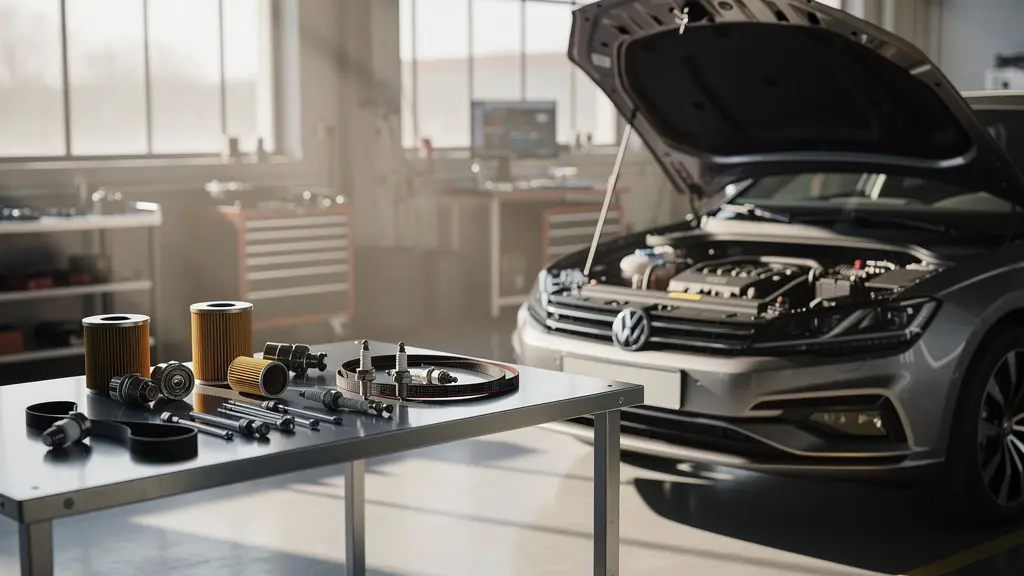
In summary:
- Shifting your mindset from maintenance as an expense to an investment is key to engine longevity.
- Focusing on high-risk components like the timing belt and turbocharger prevents the most expensive, catastrophic failures.
- Using the correct, high-quality fluids (especially full synthetic oil) is the single most effective way to protect modern engines.
- Regular, simple checks are your first line of defence against the silent destroyers: corrosion, contamination, and wear.
For the owner who wants their car to last ten years or more, the standard advice often feels insufficient. You’re told to « change your oil » and « check your fluids, » but rarely are you told why these are not just chores, but strategic moves in a long-term game against mechanical decay. The reality is that most engines don’t simply wear out evenly; they suffer from specific, catastrophic failures that could have been avoided. This isn’t just about ticking boxes on a service schedule; it’s about developing mechanical sympathy and understanding the financial leverage of proactive care.
The goal isn’t just to keep the car running, but to maintain its health, performance, and reliability for well over a decade. This requires moving beyond the « what » and diving deep into the « why. » Why is a delayed oil change fatal for a turbo? Why is road salt a more insidious threat than you think? The truth is, most major engine disasters are not sudden, unpredictable events. In fact, industry data suggests that 90 percent of engine failures are preventable through proper maintenance. It’s about identifying the critical failure points and making small, regular investments to prevent a bill that could write off the car entirely.
This guide is designed to transform you from a passive car owner into a proactive longevity manager. We will dissect the most critical maintenance tasks, exposing the engineering reasons and financial stakes behind each one. By understanding these systems, you can make informed decisions that will genuinely double the effective lifespan of your engine.
text
This article provides a detailed roadmap for ensuring your engine’s long-term health. Below is a summary of the key areas we will explore to help you master the art of preventive maintenance.
Summary: A strategic guide to engine longevity
- Courroie ou chaîne : pourquoi la rupture est la panne la plus coûteuse à éviter ?
- Pourquoi le sel des routes britanniques est l’ennemi n°1 de votre sous-bassement ?
- Huile, liquide de refroidissement, lave-glace : le rituel mensuel indispensable
- Filtre à air et habitacle : pourquoi les changer améliore la conso et votre santé ?
- Batterie et antigel : les 2 points critiques pour démarrer par -5°C
- Quand changer la courroie de distribution : les signes qui ne trompent pas
- Pourquoi un retard de vidange est-il fatal pour le palier du turbo ?
- Pourquoi l’huile synthétique est-elle obligatoire pour les moteurs modernes ?
Belt or chain: why a break is the most expensive breakdown to avoid?
In the world of engine longevity, no single component carries more financial risk than the timing system. Whether your engine uses a rubber belt or a metal chain, its job is to synchronise the rotation of the crankshaft and the camshafts. This ensures that the engine’s valves open and close at the precise moment to let air in and exhaust out, while the pistons move up and down. If this synchronisation fails, the pistons can smash into the open valves, causing a cascade of internal destruction. This isn’t a minor repair; it’s a catastrophic failure that often results in an engine rebuild or replacement, a cost that can easily exceed the value of an older car.
The distinction between a belt and a chain is crucial for long-term ownership. A rubber timing belt is a wear item with a finite lifespan, designed to be replaced at specific intervals. A timing chain is designed to last the life of the engine but can stretch and its guides can wear, requiring monitoring and eventual replacement. Ignoring the replacement interval on a belt is a high-stakes gamble with no warning signs. The cost of a preventive replacement is a fraction of the cost of failure, as the following comparison makes clear.
| Component | Replacement Interval | Warning Signs | Failure Cost |
|---|---|---|---|
| Timing Belt | 60,000-100,000 miles | Often no external signs | $700 service vs $6,000+ engine rebuild |
| Timing Chain | Lifetime (monitor for wear) | Rattling, whining noises | $1,500-3,000 if caught early |
Understanding which system your car has and adhering strictly to its maintenance protocol is the first and most important rule of long-term engine ownership. Treating this single service item as non-negotiable is the highest-leverage investment you can make in your vehicle’s future.
Why is British road salt the #1 enemy of your undercarriage?
While a timing belt failure is a sudden, catastrophic event, the damage from road salt is a slow, silent killer. For drivers in the UK and other regions with harsh winters, the chemical assault on a car’s undercarriage is relentless. The salt mixture used to de-ice roads is highly corrosive and, when combined with moisture, it aggressively attacks exposed metal components. This isn’t just a cosmetic issue of surface rust; it’s a structural threat. Environmental corrosion can weaken subframes, rot brake lines, seize suspension components, and perforate oil pans. What starts as an unseen threat under the car can lead to MOT failures and repairs costing thousands.
The engine bay is not immune. Salt spray gets drawn into the front of the car, coating alternators, radiator fins, and engine block surfaces. This leads to premature failure of electrical components and reduces the cooling system’s efficiency, putting extra stress on the engine. Protecting your car is not a one-time job but an ongoing battle, especially at the end of winter. A thorough decontamination is essential to neutralise the corrosive agents before they can do long-term damage.

This image perfectly illustrates how corrosion transitions from a protected surface to an oxidised, pitted area. The key to prevention is creating and maintaining a barrier, and diligently cleaning away the corrosive film after winter. This involves more than a simple car wash; it requires a targeted rinse of the undercarriage, focusing on frame rails, wheel wells, and the area behind the front bumper where salt accumulates.
Oil, coolant, washer fluid: the essential monthly ritual
If the timing belt is the engine’s pacemaker, then its fluids are its lifeblood. The simple act of checking fluid levels and conditions on a monthly basis is the most fundamental habit of a proactive owner. It provides a real-time health report of the engine’s core systems and allows you to catch small issues before they escalate into major problems. Forgetting this simple ritual can have severe consequences, as a leading technical team explains.
Neglecting your engine oil one or two times a month can lead to increased friction, overheating, and compromised engine performance.
– Jidd Motors Mitsubishi Technical Team, Essential Preventative Maintenance Tips 2024
Your three most critical fluids are engine oil, coolant, and washer fluid. Engine oil lubricates, cleans, and cools internal parts. Low oil level leads to starvation and rapid wear. Coolant (antifreeze) prevents both overheating in summer and freezing in winter, and its corrosion inhibitors protect the entire cooling system. Washer fluid is a direct safety item, essential for maintaining clear visibility. A consistent monthly check takes less than ten minutes and is the cheapest insurance you can buy for your engine.
Your action plan for: The Monthly Fluid Check
- Park on a level surface with the engine cold to ensure accurate readings.
- Check engine oil using the dipstick: pull it out, wipe it clean, reinsert it fully, then pull it out again to check the level against the min/max marks. Note the colour and consistency.
- Inspect coolant level in the expansion tank, ensuring it’s between the min and max lines. Never open the radiator cap on a hot engine.
- Top up the washer fluid reservoir with a solution appropriate for the current climate (e.g., with anti-freeze properties for winter).
- Document the levels, perhaps with a quick photo, to establish a baseline and easily spot slow leaks over time.
This regular inspection builds your mechanical sympathy, helping you become familiar with your car’s normal state and making abnormalities immediately obvious. A sudden drop in coolant or oil is a clear signal that an immediate professional inspection is required.
Air and cabin filters: why changing them improves fuel economy and your health?
An internal combustion engine is essentially a large air pump. For it to run efficiently, it needs to breathe clean, unrestricted air. The engine air filter is the component responsible for this, acting as the lungs of your vehicle. It traps dust, pollen, insects, and other debris before they can be ingested by the engine. Over time, this filter becomes clogged, restricting the airflow. When this happens, the engine’s computer compensates for the lack of air by injecting more fuel to maintain the correct air-fuel mixture, directly increasing your fuel consumption.
A severely clogged filter not only hurts your wallet but also harms the engine itself. It can lead to incomplete combustion, causing carbon to build up on valves and spark plugs, reducing performance and potentially damaging the expensive catalytic converter. The replacement interval is relatively short, and for good reason. Most experts recommend checking and replacing the engine air filter frequently, with ATC Auto Center recommending a check every 12,000 to 15,000 miles. It’s a simple, inexpensive job that has a direct impact on engine health and efficiency.
Case Study: The Cascade Effect of a Clogged Air Filter
Technicians at Jidd Motors Mitsubishi report a clear pattern in vehicles with neglected air filters. The restricted airflow forces the engine’s management system to run a « rich » fuel mixture. Initially, the only symptom is poor fuel economy. However, over an extended period, this condition leads to a cascade of problems: significant carbon deposits form on intake valves, hampering performance. In the worst cases, unburnt fuel can exit the engine and overheat the catalytic converter, leading to its premature and very costly failure.
Just as important is the cabin air filter, which cleans the air you breathe inside the car. It filters out dust, pollutants, and allergens from the outside air. A clogged cabin filter reduces the effectiveness of your heating and air conditioning system and can lead to musty odours and poor air quality inside the vehicle. Changing both is a quick, easy, and affordable way to protect your engine’s health and your own.
Battery and antifreeze: the 2 critical points for starting at -5°C
Winter exposes every weakness in a car’s core systems, but two components are overwhelmingly responsible for a non-start on a frosty morning: the battery and the coolant (antifreeze). A car battery’s chemical reaction slows down in the cold, reducing its available power. At the same time, cold engine oil thickens, requiring much more power from the starter motor to turn the engine over. This combination of reduced supply and increased demand is why a weak battery that worked fine in summer will suddenly fail when the temperature drops.
Regular battery maintenance is crucial. This includes keeping the terminals clean from corrosive buildup, which can impede the flow of electricity, and ensuring the battery is fully charged. If you make lots of short trips or leave the car standing for long periods, the alternator may not have enough time to fully replenish the battery’s charge. A simple battery maintainer or a longer weekly drive can make all the difference. The other critical winter fluid is your antifreeze. Its primary job is to lower the freezing point of the water in your cooling system. If the coolant freezes, it expands, which can crack the engine block or radiator—a catastrophic failure. Just as importantly, the inhibitors in antifreeze prevent corrosion. These inhibitors deplete over time, which is why it’s not enough for the coolant to just be present; it must be fresh. For this reason, Motorway recommends draining and changing antifreeze about every 30,000 miles.
Ensuring your battery is healthy and your coolant is fresh before winter sets in is not just for convenience. It’s a strategic move to prevent being stranded and to protect the engine from the most severe forms of cold-weather damage. A simple check with a voltmeter for the battery and a hydrometer for the coolant can give you a clear picture of your winter-readiness.
When to change the timing belt: the signs that don’t deceive
As we established earlier, timing belt failure is one of the most destructive events an engine can experience. This makes the question of *when* to change it one of the most critical decisions a car owner will make. The challenge, particularly with rubber belts, is the almost complete lack of warning signs. Unlike a squealing auxiliary belt or a rattling timing chain, a timing belt will typically perform perfectly right up until the moment it snaps.
Therefore, the only reliable « sign » is the one printed in your vehicle’s service manual: the manufacturer’s recommended replacement interval. This is given in both mileage and time (e.g., 80,000 miles or 7 years, whichever comes first). The time limit is just as important as the mileage, as the rubber and reinforcing cords degrade with age, heat cycles, and exposure to oil, regardless of how far the car has been driven. A low-mileage older car can be at just as much risk as a high-mileage newer one. The industry standard for replacement generally falls within a specific range, with most manufacturers recommending a timing belt replacement every 60,000 to 100,000 miles.
What if you’ve bought a used car and have no service history? In this scenario, the only safe assumption is that the belt has *not* been changed. The cost of a preventative replacement is a small price to pay for peace of mind compared to the risk of engine destruction. For engines with a timing chain, the signs are more audible. A rattling or whining noise, particularly on a cold start, can indicate that the chain has stretched or the plastic tensioners and guides have worn out. This noise should never be ignored, as it’s a direct warning that the timing system’s integrity is compromised.
Why is a delayed oil change fatal for a turbocharger’s bearing?
Modern engines, particularly smaller, high-performance units, rely heavily on turbochargers to produce power efficiently. A turbocharger uses exhaust gases to spin a turbine at incredible speeds—often exceeding 150,000 RPM—which in turn forces more air into the engine. The component that allows this phenomenal speed is a tiny, precision-engineered bearing, and its survival depends entirely on a constant supply of clean, high-quality engine oil. This is where a delayed oil change becomes fatal.
As engine oil ages, it degrades. It becomes contaminated with combustion byproducts, loses its viscosity (its ability to flow and maintain a protective film), and its additives burn off. For a turbocharger’s bearing, this degraded oil is a death sentence. The extreme temperatures inside the turbo (which can glow red-hot under load) effectively « bake » the old, dirty oil onto the small oil passages. This process, known as oil coking, creates hard carbon deposits that restrict or completely block the flow of oil to the bearing. According to an analysis from Barry’s Auto Body, this oil starvation leads to catastrophic bearing seizure and complete turbo failure.
The failure is often instantaneous and total. The shaft seizes, the turbine blades can shatter, and metal fragments can be sent into the engine and intercooler, causing widespread collateral damage. A simple turbo replacement can cost over £1,500; if shrapnel has entered the engine, the cost can be many times that. This entire disaster can be traced back to one root cause: failing to maintain the integrity of the engine oil. It’s the most stark example of how a seemingly minor act of neglect—stretching an oil change interval—can directly cause one of the most expensive mechanical failures on a modern car.
Key takeaways
- The timing belt/chain is the single biggest financial risk. Ignoring its service interval is not an option.
- Oil quality is non-negotiable for modern engines, especially turbocharged ones. Always use the correct full synthetic oil to prevent fatal oil coking.
- Systematic checks of all fluids and filters are the cheapest and most effective insurance policy against gradual, systemic engine wear.
Why is synthetic oil mandatory for modern engines?
The conversation about turbo failure and oil coking leads directly to the most important fluid decision you can make for a modern engine: using synthetic oil. The term « synthetic » isn’t just marketing; it refers to an oil that has been chemically engineered at a molecular level to provide performance and protection far beyond what conventional mineral oil can offer. While conventional oil is refined from crude oil, its molecules are irregular in size and shape. Synthetic oil molecules are uniform, which provides a stronger, more consistent lubricating film.
This molecular consistency is what makes synthetic oil mandatory for modern engines. These engines run hotter, operate under higher pressures, and have tighter internal tolerances. Synthetic oil’s superior thermal stability means it resists breaking down and « coking » at the extreme temperatures found in a turbocharger. It also maintains its proper viscosity over a much wider temperature range, flowing easily on a freezing cold start but not becoming too thin when the engine is hot. This directly translates to superior wear protection during the engine’s most vulnerable moments. Recent advancements are so significant that some service schedules have been massively extended, with Diesel Repair noting that some intervals now reach up to 25,000 miles thanks to high-quality synthetics.
While the upfront cost of a synthetic oil change is higher than a conventional one, the long-term value is undeniable. The superior protection it offers and the extended change intervals it allows make it the more economical choice over the life of the vehicle, as this comparison shows.
| Property | Conventional Oil | Synthetic Oil |
|---|---|---|
| Molecular Structure | Irregular, varied sizes | Uniform, consistent molecules |
| Temperature Stability | Degrades at extremes | Maintains viscosity |
| Change Interval | 3,000-5,000 miles | 7,500-25,000 miles |
| Engine Protection | Basic lubrication | Superior wear protection |
| Cost per Change | $30-50 | $60-80 |
For any engine built in the last two decades, especially one with a turbocharger, using anything less than a full synthetic oil that meets the manufacturer’s specification is actively shortening its life. It is the foundational element of a modern longevity strategy.
By adopting this strategic, knowledge-based approach to maintenance, you are no longer simply servicing your car; you are actively managing its future. Begin today by checking your service history, booking that overdue timing belt change, or simply committing to the monthly fluid ritual. Your engine—and your bank account—will thank you for it in the long run.
Frequently asked questions about engine longevity
Are there visible signs of timing belt wear?
For rubber timing belts, there are often NO reliable external signs of wear. You cannot see cracks or fraying without significant disassembly. The only trustworthy sign is reaching the manufacturer’s recommended replacement interval in either mileage or time.
What about time vs. mileage for replacement?
Both are equally important. The rubber compounds in a timing belt degrade and become brittle with age, regardless of how many miles the car has driven. A 10-year-old belt with only 30,000 miles can be just as dangerous as a 5-year-old belt with 90,000 miles. Always adhere to whichever limit comes first.
What happens if I don’t know the belt’s service history?
If you have purchased a used vehicle or are in any doubt about when the timing belt was last replaced, the safest and most recommended course of action is to schedule a replacement immediately. The cost of the service provides peace of mind and is insignificant compared to the cost of engine failure.