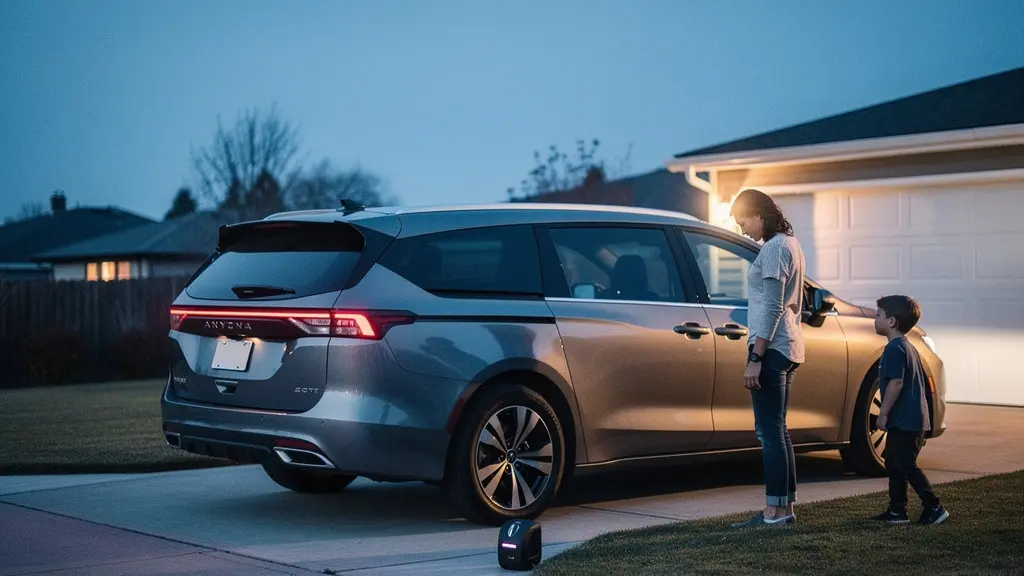
The monthly fee is not for the app; it is the price of keeping your asset recoverable during the « golden hour » of theft.
- Hardware alone is useless without a 24/7 data connection to bypass signal jammers and dead zones.
- Police response times improve drastically when you provide live coordinates rather than a static « stolen » report.
Recommendation: If you live in a high-crime zone, combine a hardwired subscription tracker with a physical kill switch for a layered defense strategy.
It usually happens between 2:00 AM and 4:00 AM. You wake up, look out the window, and the driveway is empty. The sinking feeling in your stomach isn’t just about the loss of a machine; it’s the immediate realization of the chaos to come: police reports, insurance battles, and the sudden inability to get to work or school.
Most owners rely on standard insurance, assuming it makes them whole. This is a dangerous platitude. Insurance covers the current market value—often thousands less than replacement cost—and it certainly doesn’t cover the weeks of stress while the claim processes. We need to shift the conversation from « financial reimbursement » to « asset recovery. » In the world of high-stakes theft, speed is the only currency that matters.
But is a paid subscription tracker the answer, or just another monthly drain on your bank account? While many view these devices as simple peace-of-mind gadgets, a recovery specialist sees them differently: as the only active weapon you have in an asymmetrical war against increasingly sophisticated thieves. It’s not about watching your car; it’s about giving law enforcement the ammunition they need to act.
In this analysis, we will dismantle the economics of tracking, expose the tactical realities of signal jamming, and determine if the cost of a subscription outperforms the risk of total loss.
For those who prefer a visual breakdown of the hardware landscape before diving into the tactical details, the following video provides a solid overview of the device types we will discuss.
To understand the true value of these systems, we must look beyond the brochure and into the mechanics of theft recovery. Here is how we will break down the tactical advantage.
text
Table of Contents: The Recovery Protocol
- Under the seat or in the bumper: where to hide the bug so it remains untraceable?
- What happens if thieves use a GPS « Jammer »?
- Internal battery or 12V hardwire: which tracker for a low-use car?
- Why do police act faster with a live tracking link?
- Geofencing and speed alerts: surveillance or necessary parental protection?
- Why does your key in the hallway allow thieves to drive away?
- Guaranteed courtesy car: why do you end up walking after a theft?
- How to protect your « Keyless » car against relay theft in 60 seconds?
Under the seat or in the bumper: where to hide the bug so it remains untraceable?
The first mistake most owners make is predictable placement. Thieves know to check the OBD-II port under the steering wheel and the glove box within ten seconds of entering the vehicle. If your tracker is found, the subscription is worthless. Effective concealment requires thinking like an extraction team, not a consumer.
The device must be integrated into the vehicle’s anatomy. It shouldn’t look like an aftermarket add-on; it should look like part of the harness. This means deep concealment behind dashboard panels, under the center console, or even inside seat cushions, provided the material doesn’t block the signal.
The image below illustrates the level of integration required for a professional install. Note how the device blends into the existing wiring loom.
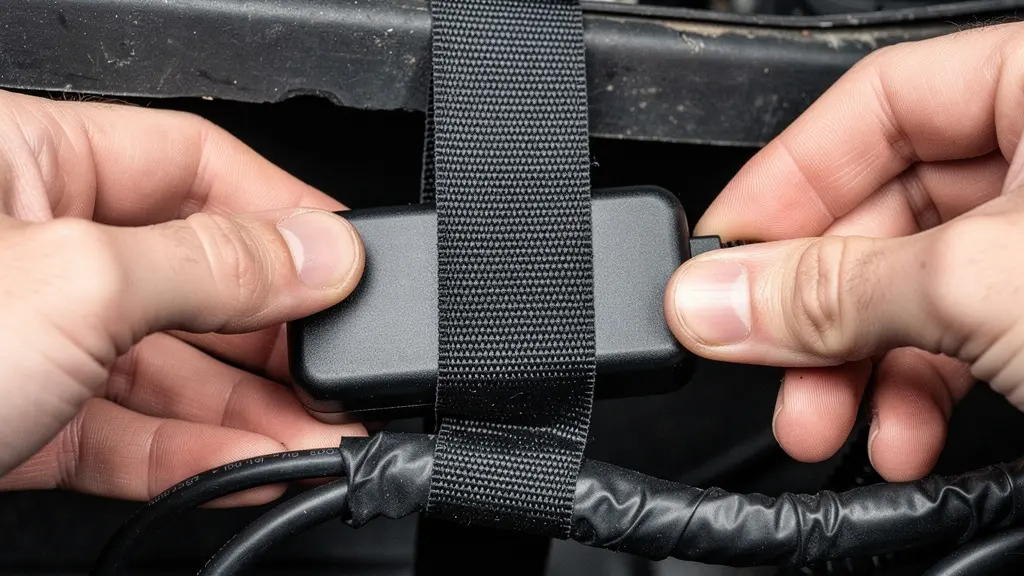
As seen above, the use of automotive fabric tape is critical. It prevents the plastic rattling that might alert a thief and visually camouflages the unit. However, placement is a compromise between stealth and signal. As noted by experts, if a tracker is poorly positioned, particularly inside metallic structures, the signal can be effectively deadened.
Concealment Audit Checklist: Deployment Protocol
- Points of contact: lister tous les canaux où le signal est émis
- Collecte : inventorier les éléments existants (exemples précis)
- Cohérence : confronter aux valeurs/positionnement (critères)
- Mémorabilité/émotion : repérer unique vs générique (grille rapide)
- Plan d’intégration : remplacer/combler les “trous” (priorités)
This physical layer is just the foundation; without it, the electronic countermeasures we discuss next are irrelevant.
What happens if thieves use a GPS « Jammer »?
In high-crime areas, « grab squads » often carry GPS jammers. These small devices plug into a cigarette lighter and flood the frequency with noise, effectively blinding standard GPS units. A tracker that relies solely on satellite positioning becomes a paperweight the moment the jammer is active. This is where the quality of your subscription hardware is tested.
Professional-grade trackers utilize Cellular Triangulation (LBS) and Wi-Fi sniffing as fallbacks. While less precise than GPS, these methods can still locate the vehicle within a few hundred meters, which is sufficient for law enforcement to begin a grid search. Some advanced recovery systems also utilize VHF (Very High Frequency) technology, which is immune to standard GPS jammers and can track vehicles even in underground containers.
The visual below metaphorically represents this invisible war between the jammer’s interference and the tracker’s persistence.

The threat is not theoretical. In the UK, the Tracker Network documented a case where thieves used a jammer to steal a £194,000 Mercedes-Benz G63 AMG. Despite the GPS block, the vehicle was recovered by police within about 3 hours thanks to non-GPS location layers like VHF.
Jammer Defense Protocol: Features to Verify
- Points of contact: lister tous les canaux où le signal est émis
- Collecte : inventorier les éléments existants (exemples précis)
- Cohérence : confronter aux valeurs/positionnement (critères)
- Mémorabilité/émotion : repérer unique vs générique (grille rapide)
- Plan d’intégration : remplacer/combler les “trous” (priorités)
Understanding these limitations allows us to select hardware that doesn’t just work in fair weather, but under active attack.
Internal battery or 12V hardwire: which tracker for a low-use car?
For a family vehicle that might sit parked for days, power management is a critical vulnerability. A hardwired tracker offers « set and forget » convenience but draws power from the car’s 12V battery. If the device lacks a sophisticated sleep mode, it can drain the battery flat in a week, leaving you with a car that won’t start and a tracker that eventually dies.
The superior choice for high-reliability recovery is a hybrid system: a hardwired unit with an intelligent « Deep Sleep » mode and its own internal backup battery. This ensures that if thieves disconnect the car’s battery—a standard first step—the tracker continues to broadcast its position for several hours or days, allowing for recovery.
Specifications matter here. A typical hardwired tracker spec sheet should show Ultra Deep Sleep modes drawing less than 3 mA and a built-in 1000 mAh Li-Po backup battery to survive power cuts.
Power Strategy: The Low-Mileage Setup
- Points of contact: lister tous les canaux où le signal est émis
- Collecte : inventorier les éléments existants (exemples précis)
- Cohérence : confronter aux valeurs/positionnement (critères)
- Mémorabilité/émotion : repérer unique vs générique (grille rapide)
- Plan d’intégration : remplacer/combler les “trous” (priorités)
Hardware is only half the equation; the operational side is where the recovery actually happens.
Why do police act faster with a live tracking link?
Police departments prioritize crimes in progress. A report of a « stolen car, last seen yesterday » is an administrative task. A call stating « my car is currently moving northbound on Main Street, here is the live URL » turns the theft into an actionable, interceptable event. This is the difference between filing a report and triggering an operation.
Subscription services often provide a « Recovery Mode » that generates a temporary, shareable link specifically for law enforcement. This removes the friction of describing locations over the phone. The latency—the delay between the car’s actual position and the dot on the screen—must be minimal. Budget trackers with 5-minute update intervals are useless for interception; you need 5-10 second updates.
The scene below captures the ideal outcome: a quiet, precise recovery facilitated by accurate data, minimizing risk to the officers and the public.
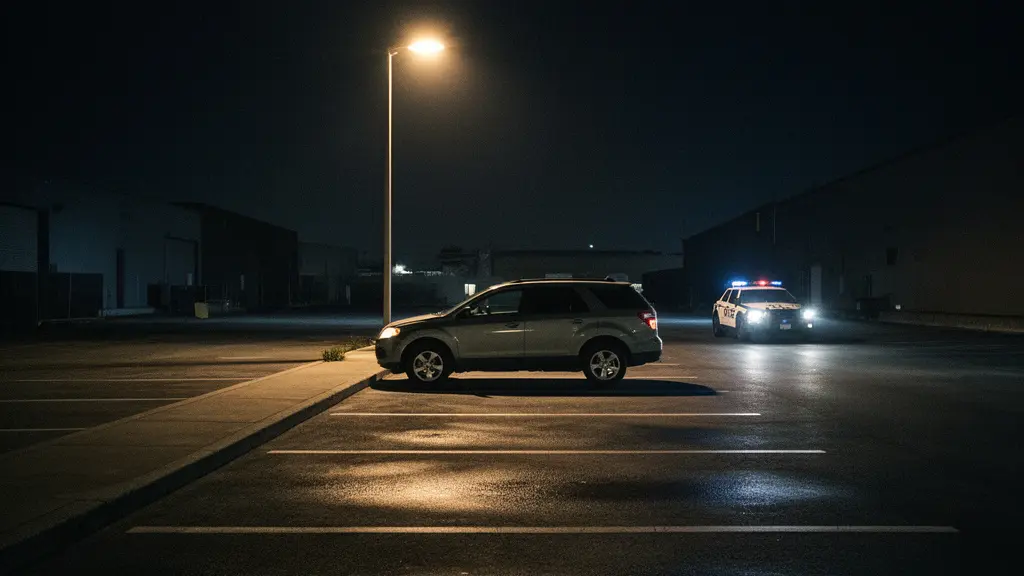
This operational integration is best illustrated by services like OnStar, where advisors use GPS to help authorities locate the car and can even support interventions such as remotely slowing the vehicle.
Case Study: The Actionable Intel Advantage
OnStar describes a process where, after law enforcement confirms a vehicle is stolen, advisors use GPS to help authorities locate the car and can support additional interventions such as remotely slowing the vehicle and preventing a restart (Remote Ignition Block) when conditions are safe. This is a concrete example of why real-time, continuously updated location data plus a formal law-enforcement workflow can accelerate response compared with static screenshots.
Speed of information is the greatest lever you have. The faster the data flows, the higher the probability of asset return.
Geofencing and speed alerts: surveillance or necessary parental protection?
Beyond theft, trackers offer telemetry that often concerns parents: location and speed monitoring. Critics call it surveillance; pragmatists call it risk mitigation. In a high-crime environment, a Geofence is not about controlling your teen driver, but about knowing instantly when your vehicle leaves a safe zone (like your driveway) at 3:00 AM.
Speed alerts serve a dual purpose. They act as a safety check for young drivers, but they also flag erratic driving patterns often associated with joyriding thieves. If your family sedan is suddenly doing 90 mph in an industrial district, the tracker is telling you the theft has occurred before you’ve even looked outside.
The safety argument is backed by data. In 2023, speeding-related crashes accounted for 29% of all traffic fatalities in the U.S., making these alerts a vital tool for family safety, regardless of the theft risk.
Defensive Geofencing Setup
- Points of contact: lister tous les canaux où le signal est émis
- Collecte : inventorier les éléments existants (exemples précis)
- Cohérence : confronter aux valeurs/positionnement (critères)
- Mémorabilité/émotion : repérer unique vs générique (grille rapide)
- Plan d’intégration : remplacer/combler les “trous” (priorités)
Alerts are your early warning radar. Without them, you are blind until the next morning.
Why does your key in the hallway allow thieves to drive away?
Modern convenience has birthed the « Relay Attack. » Your key fob constantly broadcasts a short-range signal waiting for the car. Thieves use a pair of devices—one near the car, one held up to your front door or window—to bridge this signal. The car thinks the key is inside, unlocks, and starts. It takes less than 60 seconds and is completely silent.
This method has industrialized car theft. You don’t need to break a window or hotwire an ignition. You just need a $100 repeater and a sleeping owner. The proximity of your keys to the perimeter of your house is the single biggest vulnerability in modern vehicle security.
This technological shift explains why car thefts have surged, and about 40% involve electronic devices in regions like the UK.
Anti-Relay Hygiene Checklist
- Points of contact: lister tous les canaux où le signal est émis
- Collecte : inventorier les éléments existants (exemples précis)
- Cohérence : confronter aux valeurs/positionnement (critères)
- Mémorabilité/émotion : repérer unique vs générique (grille rapide)
- Plan d’intégration : remplacer/combler les “trous” (priorités)
Electronics have made theft easier, so our defenses must be equally technological.
Guaranteed courtesy car: why do you end up walking after a theft?
The « courtesy car » clause in many insurance policies is misunderstood. It is often capped, either by a daily dollar amount or a maximum number of days. If the police investigation drags on for weeks—or if the market value negotiation stalls—you hit that limit quickly. Suddenly, you are paying out of pocket for a rental while making payments on a stolen car.
A tracker reduces the « dwell time » of the claim. By recovering the vehicle quickly (often within hours), you avoid the long-term rental costs and the risk of the insurance company settling for a low-ball « total loss » payout. The subscription cost is negligible compared to the cost of a 30-day rental not covered by your policy.
Financial exposure is real; rental reimbursement often has a limit of 14 to 30 days, leaving you vulnerable if the process drags on.
As Louis DeNicola notes in an analysis for Experian:
A car insurance claim can take 15 to 30 days to process, or it can be sooner.
– Louis DeNicola, Experian (Ask Experian)
Time is money, quite literally. A tracker buys you time by shortening the recovery window.
Key Takeaways
- Recovery speed is the primary value of a tracker, not just location history.
- Physical concealment prevents immediate disablement by thieves.
- Electronic hardening (Faraday pouches, jamming detection) is mandatory for modern cars.
How to protect your « Keyless » car against relay theft in 60 seconds?
We have established that a subscription tracker is a vital recovery tool, but it is the last line of defense. The ideal strategy prevents the vehicle from moving in the first place. This requires a Layered Defense approach that combines low-tech barriers with high-tech tracking.
The « Swiss Cheese » model of security applies here: no single layer is perfect, but stacking them covers the holes. Your stack should include a physical deterrent (steering lock), a signal blocker (Faraday pouch), and a recovery active measure (the tracker). This forces the thief to spend time—their most precious resource—defeating multiple systems.
Even robust systems have backdoors. For instance, researchers have identified methods targeting in-vehicle networks through headlight wiring, bypassing keyless security entirely.
60-Second Perimeter Hardening Plan
- Points of contact: lister tous les canaux où le signal est émis
- Collecte : inventorier les éléments existants (exemples précis)
- Cohérence : confronter aux valeurs/positionnement (critères)
- Mémorabilité/émotion : repérer unique vs générique (grille rapide)
- Plan d’intégration : remplacer/combler les “trous” (priorités)
Do not wait for the empty driveway to justify the cost. Audit your vehicle’s security layers today and install a tracker that offers true recovery capabilities.
Frequently Asked Questions about Car Theft Recovery
How effective are factory-installed trackers vs. aftermarket ones?
Factory trackers are often the first thing thieves disable because their location is standardized and known. Aftermarket trackers, when professionally hidden, offer a surprise element that increases recovery odds.
Can I just use an AirTag instead of a subscription tracker?
AirTags are better than nothing but have severe limitations: they rely on nearby iPhones to update, notify the thief if they are being tracked (anti-stalking feature), and lack the real-time, history-rich data police need for an operation.
Does a kill switch void my warranty?
In many jurisdictions, a properly installed kill switch that does not damage the ECU or harness should not void the entire warranty, but it is crucial to use a certified installer to avoid disputes with the dealer.
Will a tracker lower my insurance premium?
Often, yes. Many insurers offer discounts for approved tracking devices because they significantly reduce the risk of a total payout. Check with your provider for specific approved models.