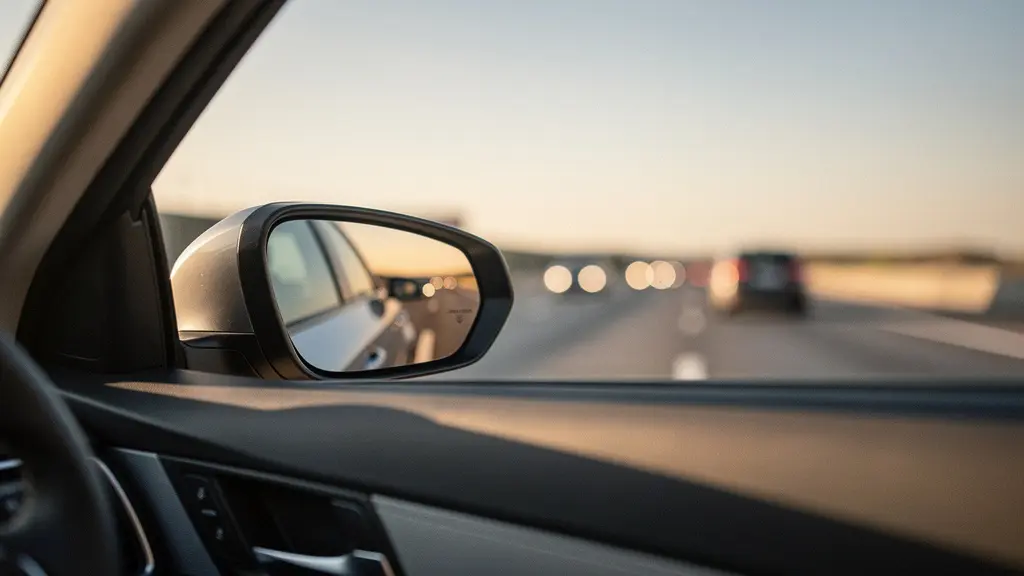
Adding a blind spot monitor is possible, but a cheap, poorly chosen system is more dangerous than no system at all due to the false sense of security it creates.
- Most affordable aftermarket kits use ultrasonic technology, which is fundamentally unreliable for highway speeds, adverse weather, and detecting small targets like motorcycles.
- True reliability comes from millimeter-wave radar systems, which can accurately track speed and distance but are more complex and expensive.
Recommendation: Before spending any money, first master the no-cost mirror adjustment technique that can virtually eliminate your car’s blind spots and drastically improve your situational awareness.
The feeling is all too familiar for any cautious driver: you’re on a multi-lane highway, you check your mirrors, signal, and begin to merge—only to be met with an angry honk from a car that was seemingly invisible a second ago. This heart-stopping moment is a stark reminder of the limitations of conventional mirrors. It’s no surprise that the market is flooded with aftermarket blind spot detection kits, many promising a simple, plug-and-play solution to this persistent problem. For a modest price, they offer the peace of mind of a modern vehicle’s safety features.
However, the promise of an easy fix often obscures a more complex and dangerous reality. The critical flaw in this thinking is assuming that any electronic aid is better than none. In reality, a cheap, unreliable system can be far worse. By creating a false sense of security, it encourages the driver to abandon the life-saving habit of shoulder-checking, a phenomenon known as automation complacency. The real key to retrofitting safety isn’t just about sticking a sensor on your bumper; it’s about understanding the fundamental physics of detection and recognizing which technology is fit for purpose and which is a liability.
This article will dissect the technology behind these systems, exposing why the most common and affordable options are ill-suited for the very situations where you need them most. We will explore the vast difference between parking-grade ultrasonic sensors and highway-grade radar, reveal why even advanced systems struggle with motorcycles, and demonstrate how you can achieve a massive safety improvement without spending a single dime. Ultimately, you’ll learn to think like a retrofit expert: prioritizing driver skill and making informed technological choices that genuinely enhance safety, rather than simply adding another blinking light.
To navigate this crucial topic, we will break down the essential factors that separate a reliable safety enhancement from a dangerous gadget. This guide provides a clear path to understanding the technology, the risks, and the most effective solutions available.
Summary: Installing a truly effective blind spot detection system
- Why are cheap ultrasonic kits useless on the highway?
- The mirror adjustment that eliminates the blind spot without spending a dime
- Does your system see lane-splitting motorcycles in traffic jams?
- Why does your detector beep without reason in heavy rain?
- The error of stopping the ‘Life Saver look’ because you have a light
- When to check your mirrors: the sequence 80% of drivers forget
- City braking vs pedestrians: does your system really detect everyone?
- How can autonomous braking reduce your insurance premium by 10%?
Why are cheap ultrasonic kits useless on the highway?
The core reason most budget-friendly blind spot kits fail on the highway is a simple matter of technology. They almost exclusively use ultrasonic sensors—the same small, circular sensors found in bumpers for parking assist. These systems work by emitting sound waves and measuring the time it takes for them to bounce back. While effective for detecting a large, static object like a wall or a bollard a few feet away, this technology has critical limitations at speed. In contrast, factory-installed and high-end aftermarket systems use millimeter-wave (mmWave) radar, a far superior technology for dynamic environments. A European highway pilot program confirmed that radar-based systems lead to a 25–30% reduction in lane-change incidents compared to those using other technologies.
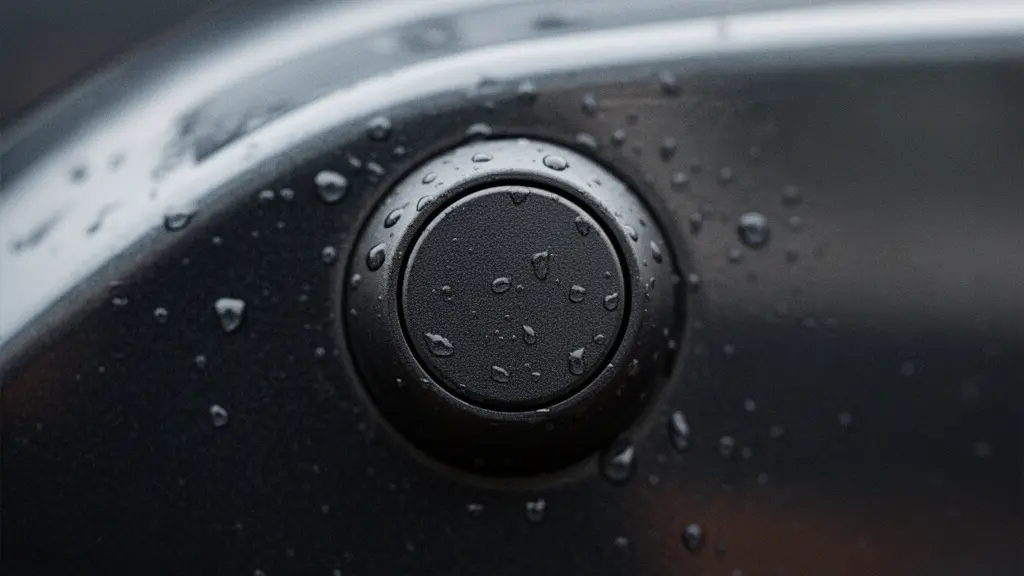
The fundamental problem is that ultrasonic sensors lack the range and intelligence for highway driving. Their detection cone is short and wide, designed for low-speed maneuvering. They cannot calculate the closing speed of an approaching vehicle (the Doppler effect), a crucial piece of information for deciding if a lane change is safe. A car approaching rapidly from behind might be outside the sensor’s limited range one moment and dangerously close the next, with the system failing to provide a timely warning. Radar, on the other hand, can see much farther and instantly compute an object’s velocity and trajectory, allowing it to differentiate between a car safely pacing you in the next lane and one about to enter your blind spot at high speed.
This table clearly illustrates the technological gap. Relying on an ultrasonic system for highway safety is like using a yardstick to measure a marathon.
| Feature | Ultrasonic Sensor | Millimeter Wave Radar (24–77 GHz) |
|---|---|---|
| Detection Range | 0–3.5 m (max ~5 m) | Up to 70+ m |
| Speed Detection (Doppler) | No native Doppler capability | Yes — computes closing speed and trajectory |
| Reaction Time (Typical Budget Kit) | >100–200 ms | <50 ms |
| Weather Resistance | Degraded by rain, ice, extreme temperatures | Operates through fog, rain, dust |
| Object Discrimination | Limited — struggles with static vs moving | Advanced — filters guardrails, tracks velocity |
| Highway Suitability | Poor — designed for parking speeds | Excellent — designed for highway speeds |
| Typical Cost (Aftermarket Kit) | $30–$100 | $150–$500+ |
Action Plan: Audit Your Blind Spot Risk Before You Buy
- Map Your Environment: Identify the primary scenarios where you feel vulnerable. Is it high-speed highway merging, dense urban traffic, or low-visibility conditions like night or rain?
- Calibrate Your Mirrors First: Before spending money, implement the BGE mirror setting (detailed in the next section). Drive with it for a week to see how much of the problem it solves.
- Identify the True Threats: Note the types of vehicles that worry you most. Are they fast-approaching cars, lane-splitting motorcycles, or large trucks? This will inform the technology you might need.
- Assess Your Habits: Honestly evaluate your reliance on shoulder checks (« Life Saver look »). Would an indicator light make you complacent, or would you use it as a secondary confirmation?
- Define Your « Minimum Viable Safety »: Based on this audit, decide if the risks of a cheap ultrasonic kit (false negatives/positives) outweigh the benefits. Is a high-end radar system a justifiable expense, or is mastering mirror and scanning techniques a better investment?
The mirror adjustment that eliminates the blind spot without spending a dime
Before investing in any electronic solution, the single most effective safety upgrade any driver can make is completely free. It involves abandoning the traditional method of mirror adjustment—where you see a large portion of your own car’s flanks—and adopting the BGE (Blindzone/Glare Elimination) setting, promoted by the Society of Automotive Engineers (SAE). This method positions the side mirrors further outward to create a seamless, panoramic view that hands off from the rearview mirror to the side mirror and then to your peripheral vision, effectively eliminating the dangerous blind spot for most vehicles.
The process is simple and counter-intuitive at first, but it radically improves situational awareness. It creates a continuous field of view, meaning a car passing you will appear in your side mirror at the exact moment it begins to leave your center rearview mirror. Then, as it leaves the side mirror, it enters your peripheral vision. There is no gap where a vehicle can hide.
- Step 1: Lean your head against the driver’s side window and adjust the left side mirror outward until you can barely see the side of your car.
- Step 2: Move your head to the center of the car (aligned with the rearview mirror) and adjust the right side mirror outward until you can barely see the passenger side of your car.
- Step 3: From your normal driving position, verify the setup. Watch a car passing you—it should appear in the side mirror just as it leaves the center rearview mirror.
- Step 4: Confirm the car appears in your peripheral vision just before it disappears from the side mirror, proving there is no blind zone gap.
- Step 5: Allow yourself one to two weeks to adapt. Your brain is conditioned to see your own car in the mirrors; you must resist the urge to revert to the old, less safe setting.
While electronic aids can be helpful, they are supplements, not replacements, for fundamental driver skill. As automotive expert Lucas Waldenbäck states, these systems can fail, but good habits are a constant.
They may miss fast-approaching vehicles, motorcycles or fail altogether. Good habits like mirror checks and shoulder glances are irreplaceable.
– Lucas Waldenbäck, Family Handyman — How to Adjust Your Mirrors to Avoid Blind Spots
Does your system see lane-splitting motorcycles in traffic jams?
One of the most challenging scenarios for any detection system, whether factory-installed or aftermarket, is the lane-splitting motorcycle. These vehicles are narrow, move at a different relative speed than surrounding traffic, and often occupy the very edge of a sensor’s detection zone. This vulnerability is not just theoretical; a study by Dynamic Research Inc. revealed that even OEM-grade systems can struggle, showing that in some trials, bikes were inadequately detected in up to 40% of cases. For cheaper ultrasonic kits, this problem is exponentially worse.
The issue lies in a radar principle called Radar Cross-Section (RCS). RCS is a measure of how detectable an object is by radar; a larger RCS means the object reflects more radar energy and is easier to « see. » A passenger car has a relatively large RCS, making it a strong target. A motorcycle, being much smaller and made of less reflective material, has a tiny RCS. According to MATLAB radar simulation models, a car’s RCS can be over 100 times larger than that of a pedestrian. A motorcycle falls somewhere in between, making it a faint, low-priority signal that a basic system’s algorithm might filter out as « clutter, » mistaking it for a non-threatening object.
High-end radar systems found in modern cars attempt to solve this with sophisticated software and sensor fusion (combining radar and camera data), but even they are not perfect. For an aftermarket ultrasonic sensor, which has no ability to measure speed or classify object shapes, a motorcycle filtering through a traffic jam is an almost impossible detection challenge. It’s a fast-moving, low-profile object in a chaotic environment. The system is far more likely to remain silent, giving the driver a deadly sense of false security just as they decide to change lanes into the path of a rider.
Why does your detector beep without reason in heavy rain?
A common and frustrating complaint from users of cheap blind spot detectors is the prevalence of « ghost » alerts—the system beeping or lighting up when there is clearly nothing in the blind spot. This issue is particularly pronounced during heavy rain, thick fog, or when driving on wet roads that produce a lot of tire spray. The reason, once again, comes down to the limitations of ultrasonic technology. These sensors are easily confused by environmental factors that interfere with sound waves.
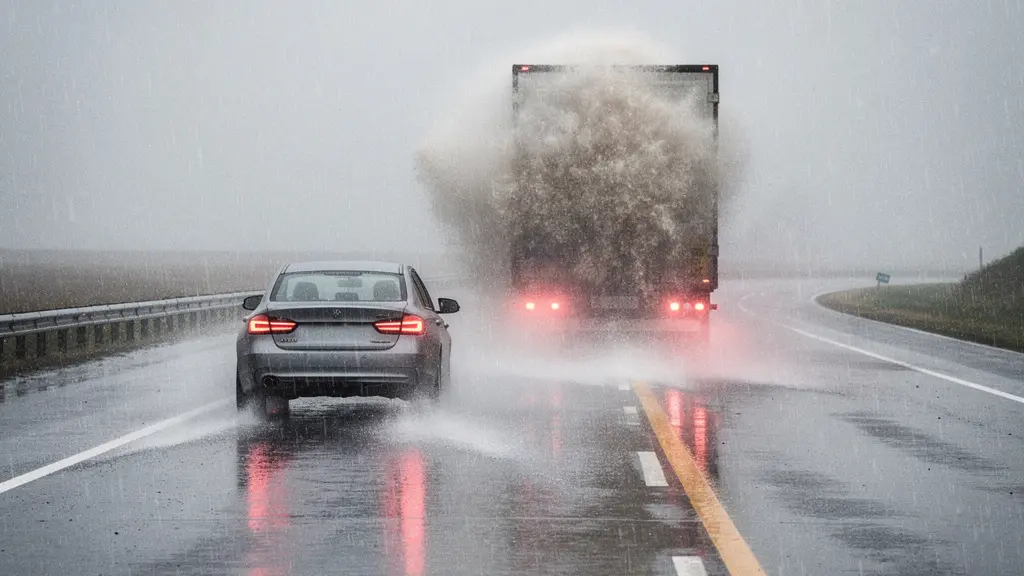
An ultrasonic sensor can’t distinguish between a solid object like a car and a dense cloud of water droplets. To the sensor, the heavy spray kicked up by a semi-truck or even your own tires can appear as an obstacle, triggering a false positive. The same is true for ice or snow buildup on the sensor itself, which can deaden its ability to detect anything or cause it to alert constantly. This unreliability in adverse weather is a major safety concern. A driver who experiences frequent false alerts will quickly learn to ignore the system altogether, a phenomenon known as alarm fatigue. When the system finally does produce a real, valid warning, the driver is conditioned to dismiss it as another phantom alert.
This is another area where millimeter-wave radar excels. Radar waves operating in the 24-77 GHz spectrum are largely unaffected by rain, fog, dust, or spray. As a European highway pilot study confirmed, the all-weather capability of mmWave radar is a key reason for its superior performance in reducing accidents. It reliably penetrates environmental clutter that blinds both ultrasonic sensors and, to a lesser extent, camera-based systems. A reliable system must be trustworthy in all conditions, not just on a clear, sunny day. When a system becomes an annoyance, it ceases to be a safety feature.
The error of stopping the ‘Life Saver look’ because you have a light
The single greatest danger of installing an aftermarket blind spot monitor is not technical—it’s psychological. The risk is automation complacency: the tendency for humans to become less vigilant and overly trusting when a task is automated. When a driver has a small light that is supposed to tell them when it’s safe, they are subconsciously trained to stop performing the crucial physical action of turning their head for a final shoulder check, often called the « Life Saver look. » This is a catastrophic error when relying on a non-OEM, uncertified system.
As experts from Consumer Reports have repeatedly emphasized, these systems are aids, not substitutes for defensive driving. This is especially true for aftermarket kits that can suffer from a « silent failure. »
Neither is a replacement for maintaining a safe following distance, checking your mirrors, and looking over your shoulder when changing lanes.
– Consumer Reports, Mobileye 560 & Goshers BSD Review
Case Study: The Danger of Silent Failure
A user on a popular automotive forum shared their experience after testing several aftermarket blind spot monitors. They found the alerts to be dangerously inconsistent: sometimes the system would warn correctly, other times it would fail to warn when a car was present, and frequently it would trigger false alerts. Crucially, the system provided no indication that it was malfunctioning. The driver might see an unlit indicator and trust that the lane is clear, when in reality the system has simply failed to detect a vehicle. This is the definition of a silent failure, and it’s what makes an unreliable system actively dangerous by breeding a false, and potentially fatal, sense of security.
An OEM system is deeply integrated into the car’s electronics and will typically display a « service sensor » or « BSD unavailable » message on the dashboard if a sensor is blocked or malfunctioning. Most aftermarket kits lack this feedback loop. They simply fail silently. The driver, lulled into complacency, stops checking over their shoulder and instead puts their trust in a light that isn’t working. The blind spot monitor should only ever be used as a final confirmation *after* you have checked your mirrors and are about to check over your shoulder. If the light confirms what your mirrors tell you, great. If it ever contradicts what you see, your own eyes and a physical head turn must always take precedence.
When to check your mirrors: the sequence 80% of drivers forget
Effective use of mirrors is not a single glance, but a continuous process of building and updating a mental map of the traffic around you. Most drivers check their mirrors reactively, just before a maneuver. Expert drivers, however, use a proactive sequence to maintain constant situational awareness. This reduces cognitive load and minimizes the time your eyes are off the road ahead. In fact, a last-second, full head turn to check a blind spot can mean you are driving for approximately 100 feet (30 m) at highway speeds with your eyes completely off the forward path.
A highly effective method is based on the OODA Loop (Observe, Orient, Decide, Act), a decision-making cycle developed for fighter pilots. Applied to driving, it creates a structured, calm approach to lane changes.
- Step 1 — Observe (10+ seconds before maneuver): Begin scanning your center rearview mirror frequently. Your goal is to build a mental picture of all vehicles behind you, their lanes, and their relative speeds. You should know what’s behind you long before you intend to move.
- Step 2 — Orient (7 seconds before): Now, glance at the side mirror for your intended lane. Identify a potential gap and, more importantly, identify any vehicle that is gaining on you or pacing you near the blind zone transition area.
- Step 3 — Decide (4 seconds before): Activate your turn signal. This is a critical communication step. Now, re-check your center mirror and side mirror to confirm the gap you chose is still open and that no fast-approaching vehicle has suddenly appeared to claim it.
- Step 4 — Act (2 seconds before): Perform the « Life Saver » shoulder check to cover the final, tiny blind spot, and if clear, execute a smooth, gradual lane change. Do not swerve.
- Step 5 — Stabilize (Immediately after): Once in the new lane, cancel your signal and do a quick check of your rearview mirror to ensure the vehicle behind you is at a safe distance and you haven’t cut someone off.
This deliberate sequence transforms a stressful, reactive event into a planned, low-anxiety maneuver. It ensures you are in full control of your environment, using your mirrors and senses proactively rather than as a last-second failsafe. Technology can assist this process, but it can never replace it.
City braking vs pedestrians: does your system really detect everyone?
While this article focuses on blind spot monitoring, the underlying detection challenges are shared across all Advanced Driver-Assistance Systems (ADAS), including Autonomous Emergency Braking (AEB). In urban environments, the greatest challenge is not detecting other cars, but detecting vulnerable road users like pedestrians and cyclists, especially in low-light conditions. Just as a motorcycle has a small Radar Cross-Section (RCS), a pedestrian’s is even smaller, making them a very faint target for radar-only systems.

According to MATLAB radar simulation models, the RCS of a pedestrian is exponentially smaller than that of a car, making them difficult for radar to reliably identify and track. This is why modern OEM systems use sensor fusion, combining radar data with information from a forward-facing camera. The camera is much better at identifying the shape of a person, while the radar is better at measuring their precise distance and speed. By fusing this data, the system can make a more confident decision.
However, cameras have their own weaknesses. They struggle in low light, at dusk or dawn, or when a pedestrian is wearing dark clothing that blends into the background (low contrast). They can be blinded by sun glare or confused by heavy rain. This is why no system is infallible. Aftermarket AEB systems, which typically rely on a single technology (either camera-only or radar-only), inherit all the weaknesses of that technology with none of the benefits of sensor fusion. A driver who over-relies on their car’s ability to brake for pedestrians may fail to react in a situation where the system is blind, with tragic consequences.
Key Takeaways
- Ultrasonic-based aftermarket kits are designed for low-speed parking and are fundamentally unreliable for highway blind spot detection due to limited range and lack of speed tracking.
- High-end, radar-based systems offer vastly superior performance, but their effectiveness is not recognized by most insurance companies for premium discounts when installed as an aftermarket modification.
- The most immediate and 100% reliable safety improvement is the BGE mirror adjustment technique, which is free and can virtually eliminate traditional blind spots.
How can autonomous braking reduce your insurance premium by 10%?
While adding an aftermarket blind spot monitor is unlikely to affect your insurance rates, having factory-installed ADAS features like Autonomous Emergency Braking (AEB) and certified blind spot monitoring often can. Many insurance carriers offer discounts ranging from 5% to 15% for vehicles equipped with these safety systems from the manufacturer. The key reason for this discrepancy is certification and integration. OEM systems are rigorously tested, validated by safety bodies like the IIHS and Euro NCAP, and deeply integrated into the vehicle’s core systems.
Insurers have no way to validate the quality, installation correctness, or reliability of a third-party kit. There is no standardized certification process for the aftermarket. Was the radar sensor calibrated correctly? Will it fail silently? Is it even a real radar, or a cheap ultrasonic sensor marketed as one? Without answers to these questions, insurers cannot assume a risk reduction. The potential for these systems to provide a return on investment is clear, as shown in a case study where a logistics company saw a 67% drop in blind spot accidents after installing commercial-grade radar systems. However, this was a professional-grade fleet solution, not a consumer kit.
The table below summarizes why insurers trust factory systems but remain skeptical of aftermarket additions.
| Criterion | OEM Factory-Installed AEB/BSD | Aftermarket AEB/BSD Kit |
|---|---|---|
| Certification | Euro NCAP / IIHS rated and validated | No standardized certification body |
| Calibration | Factory-calibrated, integrated with vehicle CAN bus | Manual calibration, variable quality |
| Insurance Premium Discount | Typically recognized (5–15% reduction) | Rarely recognized — no insurer validation pathway |
| Sensor Fusion | Radar + camera + LiDAR combinations common | Usually single-technology (radar OR ultrasonic only) |
| Silent Failure Warning | Dashboard alert if sensor blocked or malfunctioning | Often no malfunction indicator — fails silently |
| Telematics Compatibility | Integrated with OBD-II / manufacturer telematics | No telematics integration in most kits |
Ultimately, while the safety benefit of a *high-quality, properly installed* radar system is real, the financial benefit in terms of insurance premiums is largely confined to factory-equipped vehicles. For the driver of an older car, the best investment remains in skill, awareness, and the proven BGE mirror method.
Your journey to safer driving should begin with the most reliable tool at your disposal: your own skill. Start today by performing the BGE mirror adjustment and practicing the OODA scanning sequence. These expert-backed habits are the true foundation of safety, upon which any technology should only be a minor supplement.