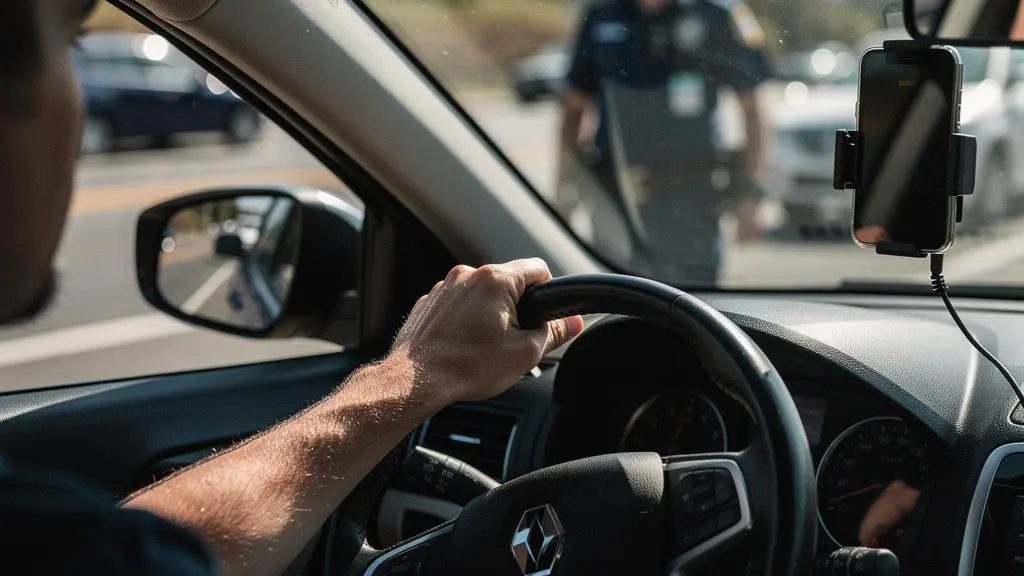
As a lawyer who defends driving privileges, I see careers and lives derailed not by major accidents, but by misunderstood cell phone laws. The common belief that using a mounted phone is « safe » or « legal » is a dangerous myth. This guide dismantles that assumption, exposing the specific, seemingly innocent actions—like changing a song or paying at a drive-thru—that constitute license-revoking offenses under a complex and unforgiving legal framework. This is not about a fine; it’s about your right to drive.
You think you know the rules. « Don’t text and drive. » It’s simple, obvious advice. But what about the grey areas that define our daily driving habits? What about tapping your mounted phone to change a song on Spotify? Or using Apple Pay at a drive-thru window? You assume these minor interactions are safe, legal, and harmless. You are dangerously mistaken.
The standard public service announcements are tragically simplistic. They fail to prepare you for the complex web of state laws, commercial driver regulations, and new enforcement technologies like AI cameras. They ignore the legal tripwires that I see my clients stumble over every single day. The harsh reality, which I witness firsthand in court, is that driving licenses are rarely lost in spectacular crashes. They are forfeited in moments of casual, misunderstood interaction with a device.
This guide is not another moral lecture on the dangers of distracted driving. This is a legal briefing from the front lines. We will dissect the specific, seemingly innocent actions that lead to immediate license revocation. We will explore the surprising liabilities that can cost professional drivers their careers. And we will provide the exact steps to defend yourself against a system that is increasingly designed to find you guilty. Your license is your livelihood and your freedom; it’s time you understood how fragile it truly is.
Before we delve into the legal specifics, the following short film powerfully illustrates the cascading impact of a single decision behind the wheel. It serves as a stark reminder of what’s truly at stake.
To navigate the complexities of cell phone laws and protect your driving privileges, it’s crucial to understand the specific scenarios that pose the greatest risk. The following sections break down the most common legal tripwires, from interacting with mounted devices to the nuances of paying at a drive-thru, providing the clarity you need to stay on the right side of the law.
Summary: Navigating the Legal Minefield of In-Car Phone Use
- Touching the phone on a support to change a song: is it authorized?
- Why do 6 points suffice to cancel a new driver’s license?
- Paying with your phone at a drive-thru: the little-known exception to the rule
- Can your boss be held liable if you answer a work call while driving?
- What to do if an AI camera mistakes you for someone on the phone?
- Why must you now yield to pedestrians who are crossing at an intersection?
- Suction cup on the windshield: where to place it legally without being in violation?
- Wireless CarPlay or Android Auto: how to install a reliable adapter?
Touching the phone on a support to change a song: is it authorized?
This is perhaps the most common and dangerous legal myth. Drivers assume that if the phone is in a cradle, it’s « hands-free » and therefore legal to interact with. This is a catastrophic misinterpretation of the law. The legal term is not « hands-free, » but rather the prohibition of « hand-held » use. The moment you touch the device, you risk crossing that line. Many jurisdictions interpret any physical interaction, beyond a single tap to accept a call, as illegal operation of a hand-held device.
The legal landscape is a patchwork of ambiguity. A jurisdiction like Ohio, for example, has a « one-swipe rule » that allows limited interaction, but what constitutes a single swipe versus multiple taps is a matter of statutory interpretation left up to the officer and the court. This ambiguity is not your friend. It is a legal trap.
For professional drivers, the rules are even more draconian. To understand the severity, consider that for commercial vehicle operators, federal regulations specify that pressing more than a single button can result in fines up to $2,750. While this applies to commercial trucks, it reveals the legal mindset: any complex interaction with a device is considered an unacceptable risk. Assuming you can legally navigate menus or change playlists while driving is gambling with your license.
Why do 6 points suffice to cancel a new driver’s license?
For an experienced driver, a single cell phone violation might result in points and a fine. For a new driver, it is often a license-ending event. This is not by accident; it is by design. Most legal systems implement a probationary period for new drivers, where the threshold for disqualification is dramatically lower. You are held to a higher standard precisely because you are less experienced.
In the UK, for instance, the law is brutally clear: drivers who passed their test in the last 2 years lose their license with just 6 points. A single conviction for using a hand-held mobile phone carries exactly that penalty. The result is not a suspension, but a full revocation. This means your license is gone, and you must start the entire process of learning to drive from scratch: re-apply for a provisional license, and re-take both the theory and practical driving tests.
The consequences are not merely inconvenient; they are financially and logistically devastating. Beyond the cost and humiliation of re-testing, your insurance rates will skyrocket. For a young driver with a freshly revoked license, premiums can easily multiply by a factor of five or ten, making driving prohibitively expensive for years. The system is designed to remove you from the road for what it deems an unacceptable early-career risk.
Paying with your phone at a drive-thru: the little-known exception to the rule
The belief that traffic laws don’t apply on private property like a fast-food drive-thru or a shopping center parking lot is another pervasive and dangerous myth. From a legal standpoint, these areas are considered « publicly accessible, » and almost all rules of the road are in full effect. This includes all prohibitions on using a hand-held mobile device.
You might argue that you are stationary when paying. However, the legal definition of « driving » or « operating » a vehicle is far broader than most people assume. In many jurisdictions, if the engine is running, you are legally operating the vehicle, even if the wheels aren’t turning. The act of picking up your phone to use a payment app while waiting in line is, in the eyes of the law, no different from texting on the highway.
Is there any exception? Theoretically, yes, but it is narrow and risky. If your vehicle is in park, with the engine completely turned off and the handbrake engaged, you could argue you are no longer « operating » it. However, the moment you restart the engine to move forward, any interaction with the phone becomes illegal again. Relying on this loophole is playing with fire. The most prudent legal advice is to treat the drive-thru lane with the same zero-tolerance for phone interaction as you would an active motorway.
Can your boss be held liable if you answer a work call while driving?
For professionals who drive for a living—salespeople, technicians, delivery drivers—the phone is a tool of the trade. It’s also a significant legal liability, not just for the driver, but for their employer. The legal doctrine of « vicarious liability » means that an employer can be held responsible for the actions of an employee performing their duties. This has massive implications for work-related calls behind the wheel.
Regulatory bodies are cracking down hard on this. The Federal Motor Carrier Safety Administration (FMCSA) in the U.S. is explicit in its rules for commercial driving. As an attorney, I often point to their stance as a benchmark for corporate responsibility. They make it unequivocally clear who is responsible:
Motor carriers are prohibited from requiring or allowing their drivers to text or use a hand-held mobile phone while driving.
– FMCSA, Federal Motor Carrier Safety Administration Distracted Driving Rules
The penalties for the company are severe. In addition to any fines the driver may face, federal regulations establish that motor carriers face civil penalties up to $11,000 for allowing or requiring a driver to use a phone illegally. This creates a powerful incentive for companies to enforce zero-tolerance policies. If you have an accident while on a work call, expect your employer’s legal team to argue that you were violating company policy, leaving you to face the consequences alone. Answering that « urgent » call from your boss is not worth your career.
What to do if an AI camera mistakes you for someone on the phone?
The newest front in traffic enforcement is the use of AI-powered cameras specifically designed to detect illegal mobile phone use. These systems are being deployed globally, and they represent a fundamental shift in enforcement. The interaction is no longer between you and a police officer who witnessed your actions; it’s between you and an algorithm that has flagged a pattern of pixels.
The problem is that these algorithms are not infallible. They can misinterpret a driver scratching their face, adjusting their glasses, or even a shadow as holding a phone. When this happens, a ticket is automatically issued, and the evidentiary burden shifts to you. You are presumed guilty and must prove your innocence against a photograph that may be ambiguous or misleading. This is a difficult legal position to be in.
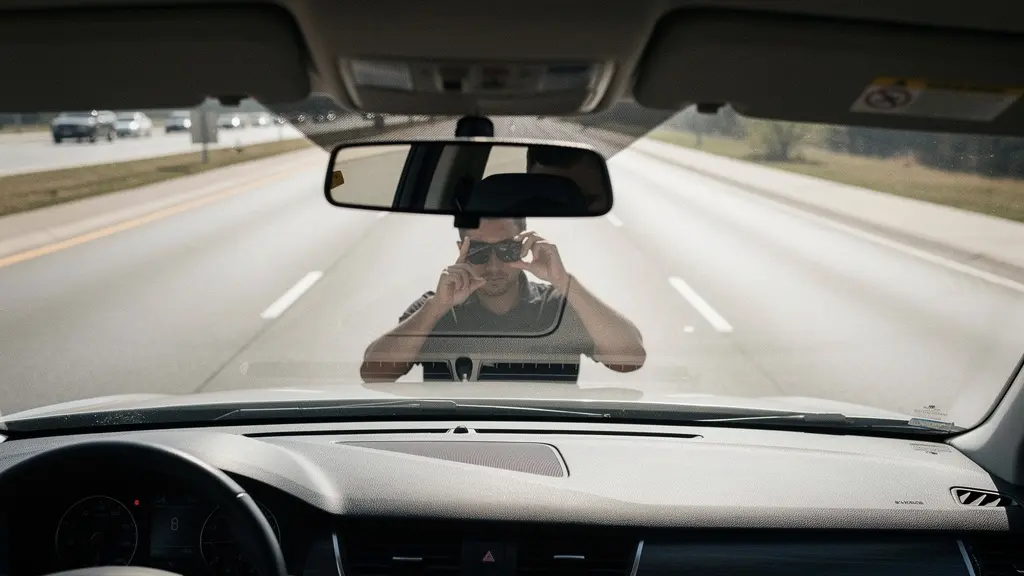
Fighting back requires a systematic and immediate response. You cannot simply ignore the ticket. You must build a case to challenge the machine’s conclusion. This involves gathering evidence to prove a negative—that you were *not* on your phone at the exact time of the alleged violation.
Action plan: Contesting an AI camera phone violation
- Review the ticket immediately: Verify all details on the notice, such as date, time, and location, for any inaccuracies.
- Request all photographic evidence: Formally request every image or video frame the authority has related to the alleged violation.
- Compile phone records: Obtain an itemized bill from your mobile carrier showing no calls or data usage at the exact time of the violation.
- Export location data: Use GPS history from apps like Google Maps or Waze to demonstrate your location and show you were not interacting with the device.
- Consult a traffic attorney: If the evidence supports your innocence, an attorney can navigate the appeals process, which is often complex and bureaucratic.
Why must you now yield to pedestrians who are crossing at an intersection?
The legal responsibility to yield to pedestrians is not new, but its enforcement is becoming more aggressive in direct response to the epidemic of distracted driving. A driver looking down at a phone is a driver who is effectively blind to their immediate surroundings. This blindness is most lethal to the most vulnerable people on our roads: pedestrians and cyclists. Law enforcement and courts view a driver’s failure to see a pedestrian as a direct symptom of distraction, and they act accordingly.
The statistics are grim and form the basis for this legal crackdown. According to NHTSA data, nearly 400 pedestrians and 77 bicyclists were killed by distracted drivers in a single recent year. In the event of an accident involving a pedestrian, one of the first things investigators will look for is evidence of phone use. If found, it becomes an « aggravating circumstance, » transforming a tragic accident into a potential felony and a simple traffic violation into a life-altering conviction.
The physical reality of distraction is something I often present to juries. It is not an abstract concept. It is a measurable period of blindness. This data starkly illustrates what it means to take your eyes off the road, even for a few seconds.
| Activity | Eyes Off Road Time | Distance Traveled Blind at 55mph |
|---|---|---|
| Reading Text | 5 seconds average | Length of football field |
| Dialing Phone | 3.8 seconds | 306 feet |
| Voice Call | Intermittent | Variable |
When you look at this table, you realize that reading a text message means you travel the length of a football field completely blind. A pedestrian you would have seen easily becomes invisible. This is why you must yield; because the law presumes that if you failed to do so, it was likely because you chose to be blind.
Key Takeaways
- Any physical interaction with a phone, even when mounted, can be deemed illegal. « Hands-free » is not a legal defense if you are touching the device.
- New drivers operate on a zero-tolerance basis. A single phone violation often leads to mandatory license revocation, not just points.
- Traffic laws, including phone use prohibitions, apply on private property like drive-thrus and parking lots. Your car is not a law-free zone.
Suction cup on the windshield: where to place it legally without being in violation?
Even drivers who try to follow the law by using a phone mount can fall into a legal trap. The act of placing a suction cup mount on the windshield is itself illegal in many places. You could be pulled over and ticketed for an improperly placed mount, even if you never touch the phone. This is a classic « legal tripwire » where the violation is not the action you fear (distraction), but a secondary equipment offense.
The assumption that windshield mounting is universally permitted is false. In fact, an analysis of state laws shows that windshield mounting laws prohibit devices in nearly 50% of the United States. These laws are typically written to prevent any non-transparent item from being placed in a position that obstructs the driver’s view of the road.
The rules are a confusing patchwork that varies dramatically from one state to another, creating a nightmare for interstate drivers. What is legal in one state is an offense in the next. Consider the following variations:
- Highly Specific Zones: California permits mounts only in a 5-inch square in the lower corner of the driver’s side, or a 7-inch square in the lower corner of the passenger’s side. Anywhere else is illegal.
- Complete Prohibition: States like Alabama, Connecticut, and Georgia have laws that can be interpreted as a complete ban on any object affixed to the windshield.
- No Restrictions: Only a small handful of states, like Missouri and North Carolina, have virtually no restrictions on placement.
- Commercial Vehicles: Federal rules for commercial vehicles are again stricter, specifying placement outside of the area swept by the windshield wipers.
The only universally safe conclusion is that the windshield is a legally hazardous place for a phone mount. Far better alternatives, such as dashboard, air vent, or cup holder mounts, avoid these legal ambiguities entirely and are a much wiser choice for any driver.
Wireless CarPlay or Android Auto: how to install a reliable adapter?
After outlining the extensive legal risks of physically interacting with a phone, the only logical conclusion is to engineer a driving environment where such interaction is never necessary. This is not about willpower; it is about system design. The most effective legal defense is prevention, and the best prevention is a seamless, zero-interaction interface. This is the role of wireless Apple CarPlay and Android Auto.
When implemented correctly, these systems project your phone’s essential navigation and media functions onto the car’s infotainment screen, controlled via the vehicle’s native buttons and voice commands. The phone itself can remain in a pocket or center console, untouched and unseen. This physically and legally severs the connection between driving and illegal phone handling.
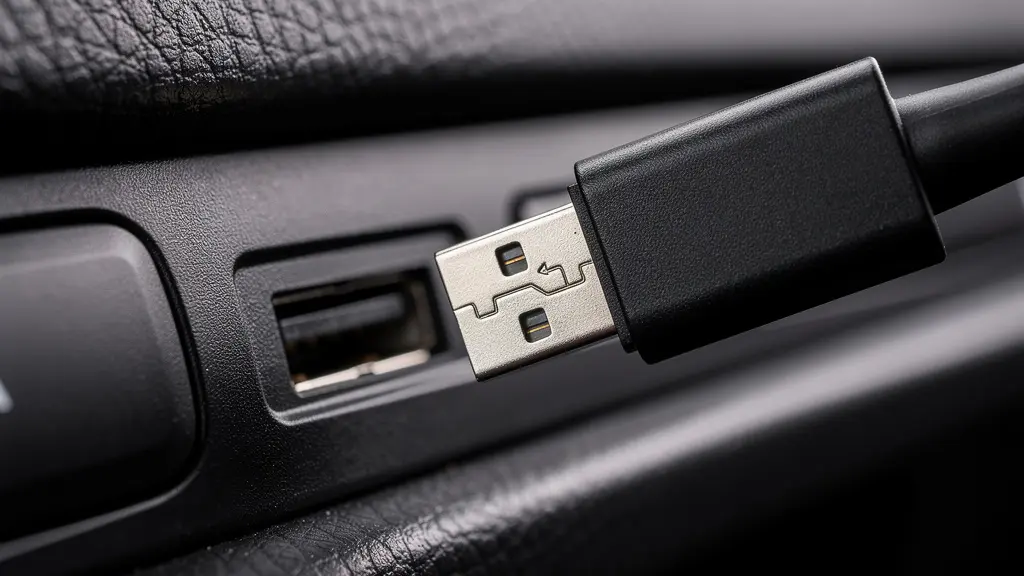
However, not all solutions are equal. A « reliable » adapter is one that is not, in itself, a source of distraction. Reliability in this context means:
- Connection Stability: The adapter must establish a connection quickly and never drop it. A faulty connection that requires you to unplug and replug the device (i.e., handle it) defeats the entire purpose.
- Low Latency: There should be no perceptible delay between your actions (like pressing « next track » on the steering wheel) and the system’s response. Lag can be frustrating and distracting.
- Thermal Management: Cheap adapters can overheat, causing them to malfunction. A reliable unit is designed for the harsh temperature fluctuations of a car’s interior.
Installing a high-quality wireless adapter is not just a convenience upgrade. From a legal defense perspective, it is a strategic investment in protecting your license. It creates an environment where the temptation and the legal risk of phone interaction are engineered out of existence.
Your license is not a right; it is a privilege that is surprisingly easy to lose. The information presented here is not meant to frighten, but to arm you with the legal reality. The next logical step is to audit your own driving habits and vehicle setup. Eliminate the tripwires before they are triggered. Protect your license, protect your livelihood.
Frequently asked questions on How to Lose Your License Over a Single Cell Phone Violation
Can I use my phone to pay at a drive-through?
Only if the engine is completely off and the handbrake is engaged. The moment you move forward, even inches, you’re legally « driving » again. This is a very narrow and risky exception to rely on.
Does the ‘private property’ exemption apply to drive-throughs?
No. This is a common and dangerous misconception. Most traffic laws, including those for cell phone use, still apply in publicly accessible areas like drive-through lanes, despite them being on private property.
What if I’m stopped but the engine is running?
This typically still counts as « driving » or « operating » a vehicle under most state laws. Commercial drivers are explicitly prohibited from phone use even when temporarily stationary, which indicates the general direction of legal interpretation for all drivers.