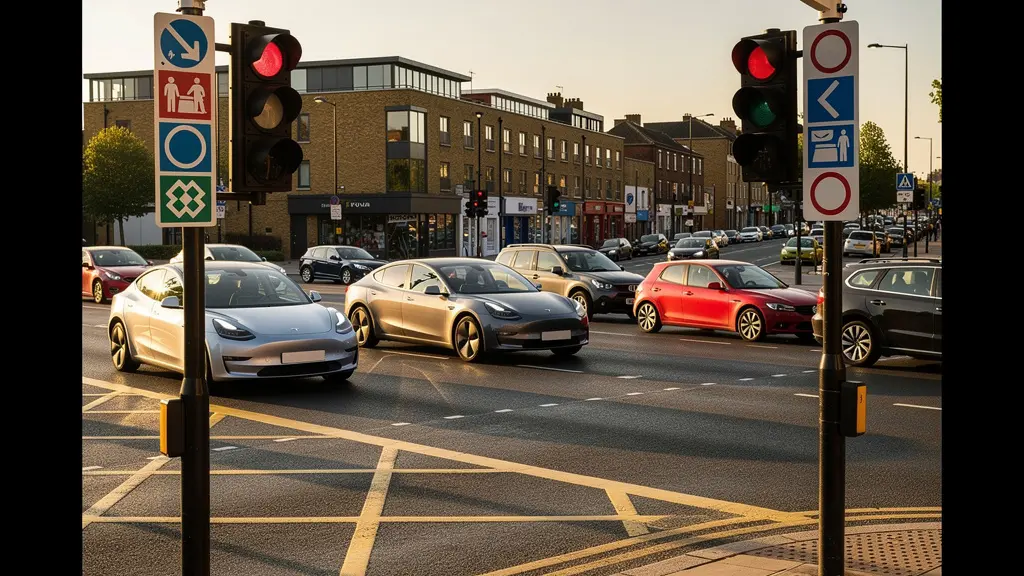
The key to avoiding unexpected city driving charges isn’t just checking your registration but understanding the specific emission rules and financial tipping points that apply to you.
- Diesel cars registered before September 2015 can still be compliant if they meet Euro 6 standards.
- For many drivers, switching to a compliant car becomes cheaper than paying daily charges in less than a year.
- Many Clean Air Zones outside of London do not charge private cars, making a huge difference to your costs.
Recommendation: Use your V5C logbook to find your car’s exact NOx emissions or Euro standard before assuming you need to pay or sell your vehicle.
The dreaded sight of a « Clean Air Zone » sign can spark immediate financial anxiety for any UK driver. With London’s Ultra Low Emission Zone (ULEZ) now expanded and other cities like Birmingham and Bristol operating similar schemes, the fear of a £12.50 daily charge—or worse, a hefty fine—is a real concern. Many drivers understandably believe the rules are simple: a car’s age determines its fate. They rush to online checkers, and if the result is negative, they resign themselves to paying up or consider the drastic step of selling their vehicle. This often leads to hasty decisions based on incomplete information, as the official advice focuses on the ‘what’ but rarely the ‘why’.
However, the landscape of urban vehicle charging is far more nuanced than a simple pass/fail on a website. The regulations are a complex tapestry of emission standards, tax classifications, and geographical boundaries. What if the secret to navigating these zones wasn’t just about compliance, but about mastering the hidden rules? The real key lies in understanding the specific financial tipping points, regulatory loopholes, and strategic alternatives that can turn this source of stress into a manageable financial plan. It’s about moving from being a passive rule-follower to an informed decision-maker who knows precisely when to pay, when to switch cars, and when to change their travel habits entirely.
This guide will demystify the complex world of UK emission zones. We will explore the critical details that official checkers often miss, from the specific reasons why some older diesel cars are exempt to the precise calculation that determines if you should pay the daily charge or change your vehicle. By understanding these underlying mechanics, you can create a clear strategy to protect your wallet and navigate any UK city with confidence.
Contents: Your Guide to Navigating UK Clean Air Zones
- Why Some 2015 Diesels Are Taxed While Others Are Free
- Paying the £12.50 Daily Charge or Changing Your Car: What’s the Break-Even Point?
- Are You Eligible for the ULEZ Resident or Disabled Exemption?
- The Auto Pay Setup Error That Cost a £180 Fine
- Converting a Classic Car to Electric: Is It a Viable ULEZ Solution?
- Why Your 2018 Diesel SUV Pays Less Tax Than a 2024 Hybrid?
- What UK Cities Will Adopt a Clean Air Zone in the Next 18 Months?
- How to Reduce Your Commute Time by 20 Minutes in Town?
Why Some 2015 Diesels Are Taxed While Others Are Free?
One of the most significant points of confusion for drivers is the ‘diesel deadline’. The general rule states that for a diesel car to be ULEZ compliant, it must meet the Euro 6 emissions standard. While official guidance often simplifies this by stating that most cars registered after September 2015 are compliant, this is a misleading oversimplification. The crucial factor is not the registration date, but the actual emissions standard the vehicle was built to. Many manufacturers adopted the cleaner Euro 6 standard years before the 2015 deadline.
This creates a « compliance anomaly » where two seemingly identical 2015 diesel cars can have completely different ULEZ statuses. A car registered in August 2015 might be a compliant Euro 6 model, while another registered on the same day could be a non-compliant Euro 5. Some Euro 6-compliant diesel cars date back as far as 2011, making them perfectly legal to drive in the ULEZ without charge, despite their age. The key is to ignore the registration date as the sole indicator and instead investigate your specific vehicle’s credentials.
So how do you find out for sure? The answer lies in your vehicle’s documentation. Don’t just rely on an online checker; become an investigator. Here’s how to find the definitive answer:
- Check your V5C logbook: The most important information is in section D.2. For a diesel car to be ULEZ compliant, its NOx emissions must be 0.08g/km or less. The Euro standard itself may also be listed.
- Look for the Euro Standard: If the NOx value isn’t there, check section D.3 for the Euro standard. If it says ‘Euro 6’, your diesel car is compliant, regardless of its registration date.
- Request a Certificate of Conformity (CoC): If the V5C is unclear, you can request a CoC from your car’s manufacturer. This document is the ultimate proof of your vehicle’s emissions standard and can be used to update the DVLA records if they are incorrect.
- Use the official checker last: Once you have this information, use the TfL vehicle checker as a final confirmation. If it shows an incorrect result, you now have the evidence to challenge it.
Paying the £12.50 Daily Charge or Changing Your Car: What’s the Break-Even Point?
Once you’ve confirmed your car is non-compliant, you face a stark financial choice: stomach the £12.50 daily charge or invest in a new vehicle. This decision shouldn’t be based on guesswork. It’s a straightforward calculation to find your personal « financial tipping point »—the moment where the accumulated daily charges exceed the cost of changing your car. While the ULEZ is a significant revenue generator for cities, with reports showing £224m was raised in charges and fines in 2022, your goal is to contribute as little as possible to that figure.
The break-even point varies dramatically based on your driving habits. A daily commuter will reach this tipping point far faster than an occasional visitor. For a London commuter entering the zone 5 days a week, the annual cost is a staggering £3,000 (£12.50 x 5 days x 48 weeks). If you can replace your non-compliant car with a compliant one for £2,000 (perhaps by using a scrappage scheme), you would break even in just 8 months. For someone who only enters the zone once a week, the annual cost is £600, and it would take over three years to justify the same £2,000 expense.
To make an informed decision, you must analyse your travel patterns honestly. The following table provides a clear breakdown for different driver profiles, helping you identify your own break-even point.
| Driver Profile | Monthly ULEZ Trips | Annual ULEZ Cost | Break-Even Point (to justify a £2,000 car change) |
|---|---|---|---|
| Occasional Visitor | 4 trips | £600 | 3.3 years (40 months) |
| Regular Commuter (5 days/week) | 20 trips | £3,000 | 8 months |
| Small Business Van (Mon-Sat) | 25 trips | £3,750 | ~6.5 months |
This analysis reveals that for frequent drivers, changing your vehicle is not just a long-term saving but an urgent financial priority. For infrequent visitors, continuing to pay the charge—a strategy of « strategic non-compliance »—can be the most economical choice. It’s all about the numbers.
Are You Eligible for the ULEZ Resident or Disabled Exemption?
Before you calculate your break-even point or start shopping for a new car, it’s vital to check if you can avoid the charge entirely. Several exemptions exist that can provide temporary or permanent relief from ULEZ charging, yet many eligible drivers are unaware of them. These aren’t widely advertised and often require a proactive application process. The most significant exemptions apply to people with disabilities and, in some cases, residents, though resident discounts have been phased out for the London ULEZ.
The disabled exemption is one of the most important. If your vehicle is registered in the ‘disabled’ or ‘disabled passenger vehicle’ tax class with the DVLA, you are exempt from paying the ULEZ charge until 24 October 2027. This applies to vehicles that may not meet the emissions standards. Similarly, holders of a Blue Badge may be eligible for exemptions, but the rules can be specific to the grace periods offered by TfL, so checking the latest guidance is essential. Applying for these exemptions is not automatic; you must register your vehicle with Transport for London (TfL) before you travel.
Another key group with a permanent exemption is owners of historic vehicles. If your car was built more than 40 years ago and is registered in the ‘historic vehicle’ tax class, it is automatically exempt from ULEZ charges. This acknowledges the cultural value and typically low mileage of classic cars. Understanding these carve-outs is a core part of mastering the system and avoiding unnecessary costs. If you think you might be eligible, use this checklist to prepare your application.
Your ULEZ Exemption Application Checklist
- Verify Tax Class: Check your V5C document to confirm if your vehicle is in the ‘disabled’, ‘disabled passenger vehicle’, or ‘historic vehicle’ tax class.
- Gather Proof: For disability exemptions, collect necessary documents such as proof of disability benefits (like PIP or DLA) or your Blue Badge details.
- Register with TfL: Go to the TfL website and formally register your vehicle for the exemption. This is not automatic and must be done in advance.
- Apply Early: Submit your application at least 10 working days before you plan to travel within the zone to ensure it’s processed in time.
- Keep Confirmation: Once approved, save the confirmation email or letter as definitive proof of your exemption status in case of any disputes.
The Auto Pay Setup Error That Cost a £180 Fine
For those who must pay the charge, the Auto Pay system seems like a perfect solution. It automatically bills your card whenever you drive into a charging zone, removing the risk of forgetting to pay. However, this convenience can quickly turn into a financial nightmare if not managed correctly. A common and costly mistake is setting up Auto Pay and assuming it’s a « set it and forget it » system. Misconfigurations or outdated information can lead to missed payments, and the consequence is a £180 Penalty Charge Notice (PCN) for each day of non-payment.
One of the most frequent errors occurs when a driver sells their non-compliant car and buys a compliant one. If they forget to remove the old vehicle from their Auto Pay account, they might continue to be charged. The opposite is even more costly: if they add a new non-compliant car to their garage but forget to add it to their Auto Pay account, they will receive fines for every journey. Another pitfall is an expired payment card. If the card on file expires, the payments will fail, and fines will accumulate without the driver’s knowledge until the dreaded letters arrive.
These fines can be devastating, especially for someone who thought they were following the rules. A single week of commuting with a failed Auto Pay setup could result in £900 in fines (£180 x 5 days). Preventing this requires a proactive approach to managing your account. Think of your Auto Pay account not as a static subscription but as a dynamic tool that needs regular review, just like your car insurance or MOT.
Checklist to Prevent Auto Pay Errors
- Verify Charges Selected: When setting up, ensure you have ticked the boxes for all relevant charges. In London, this could be both the ULEZ and the Congestion Charge if you drive into the central area during its operating hours.
- Update Payment Details: Set a calendar reminder a month before your payment card is due to expire to update the details on your TfL account.
- Manage Your Vehicle List: Immediately remove any vehicle you have sold from your Auto Pay account. Just as importantly, add any new non-compliant vehicle you purchase right away.
- Check Monthly Statements: Briefly review your bank or credit card statements each month to ensure the Auto Pay charges correspond correctly with your travel.
- Screenshot Confirmations: Whenever you make a change to your account (adding a car, updating payment info), take a screenshot of the confirmation page. This can be invaluable evidence if a dispute arises.
Converting a Classic Car to Electric: Is It a Viable ULEZ Solution?
For owners of cherished classic cars that don’t meet the « historic vehicle » 40-year-old exemption, the prospect of ULEZ charges can feel like a threat to their passion. One solution gaining traction is converting the vehicle to run on an electric powertrain. This process, known as an EV conversion or « restomod, » replaces the original petrol or diesel engine with a modern electric motor and battery pack. On the surface, it seems like the perfect answer: you keep the beautiful aesthetics of your classic while making it clean, green, and ULEZ-compliant.
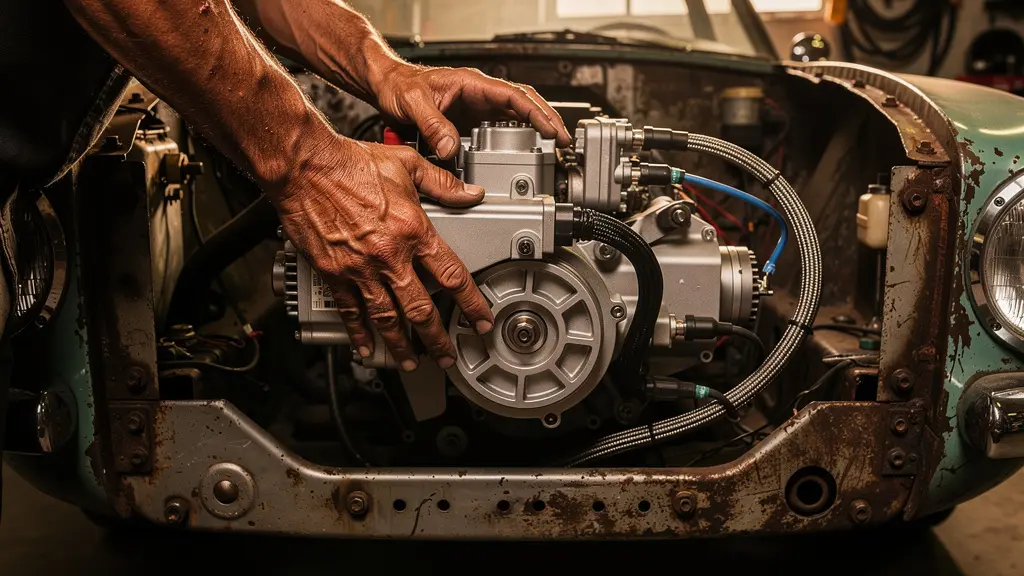
However, before embarking on this expensive journey, it’s crucial to understand a key piece of regulatory detail. As mentioned earlier, vehicles in the ‘historic vehicle’ tax class (over 40 years old) are automatically exempt from ULEZ charges. This means that for a vast number of classic cars, an EV conversion is entirely unnecessary for the sole purpose of ULEZ compliance. The conversion only makes financial sense as a ULEZ strategy for ‘modern classics’—cars that are old enough to be cherished but not old enough to qualify for the historic exemption (typically those built between 1984 and the early 2000s).
For these younger classics, an EV conversion is indeed a viable, albeit costly, solution. The benefits go beyond ULEZ compliance, often including improved reliability, lower running costs, and a quieter, smoother driving experience. However, the costs can range from £20,000 to over £100,000 depending on the car and the complexity of the conversion. It’s a significant investment that should be weighed against other options, such as paying the daily charge for occasional use or simply waiting for the vehicle to reach the 40-year exemption mark. It is a solution born of passion more than pure financial logic.
Why Your 2018 Diesel SUV Pays Less Tax Than a 2024 Hybrid?
Here lies one of the greatest paradoxes of UK vehicle regulation, a prime example of « regulatory arbitrage » where different rules create counter-intuitive outcomes. You might assume that a brand-new 2024 hybrid, marketed as a ‘clean’ vehicle, would be cheaper to run in every respect than a six-year-old diesel SUV. While both may be ULEZ-compliant and therefore cost £0 in daily charges, the picture changes dramatically when you look at the annual Vehicle Excise Duty (VED), or road tax.
The ULEZ charge is based on NOx (Nitrogen Oxides) emissions, where modern Euro 6 diesels perform very well. In contrast, VED for cars registered after 1 April 2017 is primarily based on CO2 emissions and list price. This is where the discrepancy arises. Many large, modern hybrids still have relatively high CO2 figures, and more importantly, they often have a list price of over £40,000. This triggers a « luxury car » VED supplement of £410 per year for five years (from the second year of registration).
A 2018 Audi Q5 diesel (Euro 6) is ULEZ-compliant, so it pays £0 in daily charges. Its annual VED is a standard flat rate, currently £190. A new 2024 Lexus NX 350h hybrid is also ULEZ-compliant (£0 charge), but because its list price is over £40,000, its owner pays the standard rate (£180) plus the luxury supplement (£410), for a total of £590 per year. This is more than three times the VED of the older diesel SUV.
This comparison from the RAC clearly illustrates the conflict between different environmental policies:
| Vehicle Type | ULEZ Daily Charge | VED Year 1 | VED Years 2-6 | Total VED (Years 2-6) |
|---|---|---|---|---|
| 2018 Audi Q5 Diesel (Euro 6) | £0 | £190 | £190/year | £950 |
| 2024 Lexus NX 350h Hybrid (List Price >£40k) | £0 | £180 | £590/year (£180 + £410) | £2,950 |
What UK Cities Will Adopt a Clean Air Zone in the Next 18 Months?
While London’s ULEZ dominates the headlines, it is far from the only scheme of its kind in the UK. A growing number of cities have introduced Clean Air Zones (CAZ) to tackle air pollution, and more are expected to follow. Currently, there are over 12 active CAZ/LEZ zones across England and Scotland. However, it’s crucial to understand that not all CAZs are created equal, and the impact on you as a private car driver depends entirely on the « Class » of the zone.

There are four main classes of Clean Air Zone:
- Class A: Affects buses, coaches, taxis, and private hire vehicles.
- Class B: Affects Class A vehicles plus heavy goods vehicles (HGVs).
- Class C: Affects Class B vehicles plus light goods vehicles (LGVs/vans).
- Class D: Affects Class C vehicles plus private cars.
This classification is the most important detail for a private car owner. A city with a Class C CAZ, like Bath or Newcastle, will have no financial impact on you, no matter how old your car is. The zones that should be on your radar are the Class D zones, which currently include Birmingham and Bristol, and Oxford’s pioneering Zero Emission Zone (ZEZ). Plans for a Greater Manchester CAZ have been a subject of ongoing debate and are currently on hold.
The table below summarises the status of major zones affecting private cars. As cities continue to develop their air quality plans, this landscape will change. Staying informed about proposals in cities you frequently visit is key to avoiding future surprises.
| City | CAZ Class | Private Cars Charged? | Daily Charge for Cars | Status |
|---|---|---|---|---|
| London (ULEZ) | N/A (bespoke) | Yes | £12.50 | Active |
| Birmingham | Class D | Yes | £8 | Active |
| Bristol | Class D | Yes | £9 | Active |
| Bath | Class C | No | N/A | Active |
| Newcastle/Gateshead | Class C | No | N/A | Active |
| Oxford | ZEZ (pilot) | Yes (all petrol/diesel) | £2-£10 | Active (small area) |
Key Takeaways
- The actual Euro 6 emissions standard of your car, not its registration date, determines ULEZ compliance.
- Calculate your personal « break-even point » to decide if it’s cheaper to pay the daily charge or change your vehicle.
- Always check for exemptions (disabled, historic) and understand the different CAZ classes before assuming you have to pay.
How to Reduce Your Commute Time by 20 Minutes in Town?
Ultimately, the most effective way to beat the ULEZ and CAZ charges is to avoid driving into the zones altogether. For many, this sounds like an impossibility, conjuring images of long, inconvenient journeys on public transport. However, a « multi-modal » commuting strategy can often be faster, cheaper, and less stressful than driving door-to-door. This approach involves combining your car with other forms of transport to bypass the charging zones and the congestion within them, potentially slashing your total journey time.
The core principle is to use your car for the part of the journey where it’s most efficient (e.g., from your suburban home to the edge of the city) and switch to a more suitable mode for the congested « last mile. » Park & Ride facilities are a prime example of this. By parking at a dedicated site outside the charging zone, you can avoid the daily fee entirely. Even a short drive within the zone triggers the full daily charge, so this strategy alone saves you £8-£12.50 per trip. From there, a short bus or train ride can often get you to your city-centre destination faster than if you had driven and spent 15 minutes searching for a parking space.
This isn’t just about public transport. Combining your car journey with a folding e-bike or e-scooter offers incredible flexibility. Drive to a free parking area on the zone’s periphery and cycle the last one or two miles. This is often the fastest method for navigating dense urban centres. By rethinking the commute as a series of stages rather than a single car journey, you can optimise for both cost and time.
Action Plan for a Smarter, Cheaper Commute
- Map the Zone Boundary: Identify train or tube stations located just outside the charging zone that have good parking facilities and fast links to your final destination.
- Explore Park & Ride: Research the main Park & Ride routes into your target city. Calculate the total cost (parking + bus ticket) versus the CAZ charge plus city-centre parking.
- Consider a « Last-Mile » Vehicle: Invest in a quality folding e-bike that fits in your car’s boot. This gives you complete autonomy for the final leg of your journey.
- Use Car Clubs for Occasional Trips: If you only need a car in the city centre occasionally, give up your own and use a car club service like Zipcar. The vehicles are ULEZ-compliant, and you only pay for the time you use.
- Time Your Entire Journey: Do a trial run of a multi-modal route. Don’t just compare the driving time; compare the total time from your front door to your office desk, including the time you would have spent looking for parking. The results may surprise you.
To take control of your urban driving costs, the next logical step is to perform a detailed check of your vehicle’s specific emissions and calculate your personal break-even point today.