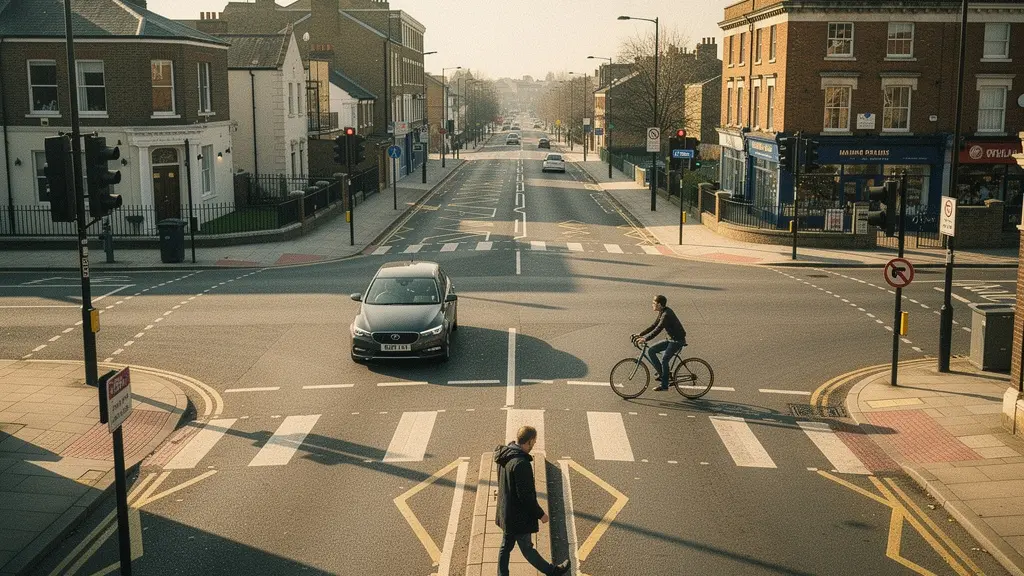
The biggest change to the Highway Code isn’t a single rule, but a new philosophy: the « Hierarchy of Road Users » means your responsibility is now proportional to the potential harm you can cause.
- Pedestrians waiting at junctions now have priority over turning vehicles.
- A minimum passing distance of 1.5 metres for cyclists is now legally mandated.
- Touching your phone for any reason while driving is illegal, even in a cradle.
Recommendation: Shift from a reactive « right of way » mindset to a proactive « shared responsibility » mindset, constantly scanning for vulnerable road users.
If you’ve been driving for 20 years, you probably feel you know the road like the back of your hand. You operate on a kind of ‘driving autopilot’, relying on decades of experience and ingrained habits. But what if the very foundation of those habits has changed? Recent updates to the Highway Code aren’t just minor tweaks; they represent a fundamental shift in the UK’s driving philosophy. Many experienced drivers, confident in their abilities, are now unknowingly breaking the law and, more importantly, putting others at risk.
The common approach is to simply list the new rules and the fines they carry. However, this misses the crucial point. The changes are designed to force a mental recalibration, moving away from an outdated concept of « right of way » towards a modern principle of « shared responsibility ». This principle establishes a « Hierarchy of Road Users, » placing the greatest responsibility on those who can cause the most harm—namely, drivers of cars and larger vehicles. It’s no longer enough to just react to hazards; the new code demands that you proactively anticipate and protect the most vulnerable.
This guide is designed for you, the experienced driver. It’s not a lecture, but a professional refresher course. We’ll go beyond simply listing what’s new. We will explore the ‘why’ behind each change, helping you unlearn old habits and retrain your driving brain for the realities of today’s roads. We will cover the critical new priorities at junctions, the non-negotiable rules on smart motorways, and the new standards of awareness required around cyclists and pedestrians, ensuring your experience keeps you—and everyone else—safe.
To help you navigate these crucial updates, this article breaks down the most significant changes you need to internalise. The following summary provides a clear roadmap of the key areas we will cover.
Summary: A Guide to the New Highway Code Rules
- Why must you now give way to pedestrians crossing at a junction?
- Red X lane: why ignoring it is the most dangerous offence?
- How much space must you leave when overtaking a bike at 30 mph?
- Why opening your door with the opposite hand can save a life?
- Signal or not: who is wrong at a two-lane mini-roundabout?
- Turning left: why must you wait for the cyclist going straight ahead?
- Touching the phone in a cradle to change a song: is it legal?
- How to anticipate road dangers before they happen?
Why must you now give way to pedestrians crossing at a junction?
For years, the unwritten rule was that pedestrians waited for a gap in traffic. This is one of the most significant habits you need to unlearn. The new Hierarchy of Road Users places pedestrians at the top, giving them priority at junctions. The updated Rule H2 states you should give way to pedestrians waiting to cross a road you are turning into or out of. They don’t have to have stepped onto the road; their intention to cross is the trigger for you to stop.
Think of it as a permanent, invisible zebra crossing at every junction. Your ‘driving autopilot’ might tell you to proceed if the road is clear of cars, but this mental model is now dangerously outdated. The new imperative is to scan the pavements as you approach a turn, looking for people who are about to cross. Unfortunately, this mental recalibration is proving slow; recent research shows only 23% of drivers always give way to pedestrians at junctions, highlighting a major gap between the law and driver behaviour.
The ‘why’ is simple: it’s about reducing casualties in high-risk zones. By making driver behaviour more predictable and cautious at junctions, the rule aims to create a safer environment for those on foot. Your task is to consciously override the old habit of looking only for cars and instead make scanning the pavement your new default action before any turn.
Red X lane: why ignoring it is the most dangerous offence?
On a smart motorway, a Red X symbol on an overhead gantry is not a suggestion or a warning; it is the legal equivalent of a closed gate. It means the lane is closed, and you must not enter it. Ignoring this signal is one of the most dangerous offences a driver can commit because the reason for the closure is almost always a person in a life-threatening situation: a broken-down vehicle, debris on the road, or emergency services at work.
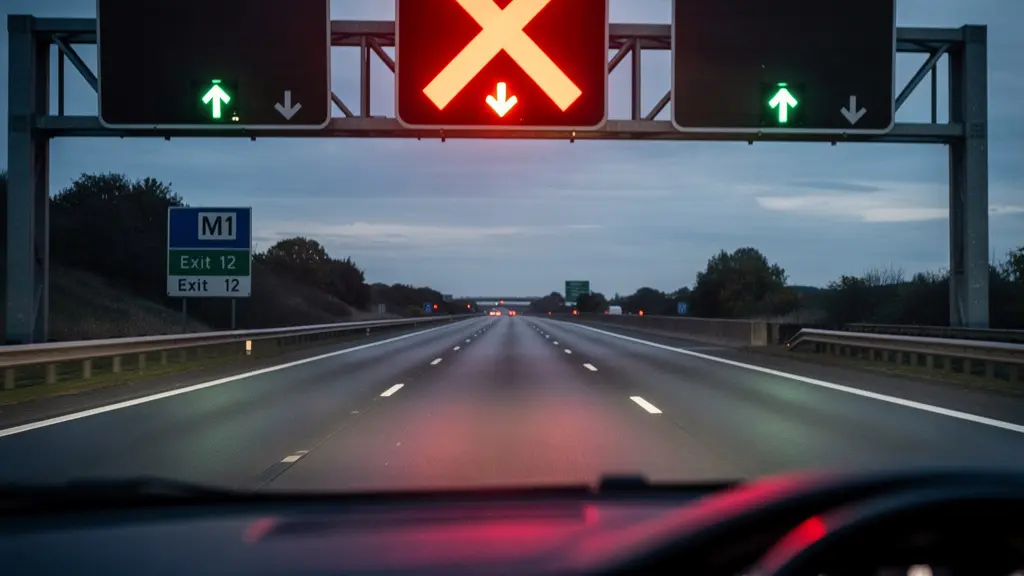
Driving in a Red X lane means you could be moments away from colliding with a stationary vehicle or, even worse, a person. The ‘why’ behind this absolute rule became clear after National Highways introduced a safety action plan. This was not just a minor tweak but part of a major safety review that implemented 33 amendments to the Highway Code to improve smart motorway safety. The plan reinforced that these lanes are closed for critical safety reasons and that enforcement would be strict.
Case Study: National Highways Safety Action Plan
Following public concern, National Highways updated the Highway Code to make smart motorway rules crystal clear. The amendments explicitly state that lanes marked with a Red X are closed to traffic and that emergency refuge areas are for genuine emergencies only, not for rest or non-urgent stops. This initiative was coupled with increased use of automatic camera technology to enforce Red X violations, underlining the shift from advisory to mandatory compliance to protect stranded motorists and emergency responders.
Your mental recalibration here is to treat the Red X with the same seriousness as a red traffic light. There are no exceptions. The lane ahead may look empty, but you cannot see what is a mile down the road. Trust the signal, move into an open lane as soon as it is safe to do so, and never use a closed lane to get ahead of traffic.
How much space must you leave when overtaking a bike at 30 mph?
The old advice to « give cyclists plenty of room » was vague and subjective. The new Highway Code removes this ambiguity. Rule 163 now specifies a minimum passing distance of 1.5 metres (about 5 feet) when overtaking cyclists at speeds up to 30 mph. For speeds above 30 mph, you should leave even more space. This is no longer a guideline; it’s a measurable standard for safe driving.
This rule requires a significant mental recalibration for many experienced drivers who are used to squeezing past. You may need to slow down and wait behind the cyclist until there is a safe gap in oncoming traffic to pass, just as you would for a car. This change reflects the vulnerability of cyclists, who may need to swerve to avoid potholes or other road defects. A sudden gust of wind from your vehicle can easily unbalance a rider if you are too close. Yet, awareness of this crucial update is shockingly low. According to a survey conducted months after the changes, 61% of drivers had not read the revised Highway Code guidance, meaning a majority of people on the road are likely unaware of this specific distance rule.
The table below clarifies the minimum distances for various vulnerable road users, reinforcing the need for more space and slower speeds.
| Road User | Speed | Minimum Distance | Additional Conditions |
|---|---|---|---|
| Cyclist | Up to 30mph | 1.5 metres (5 feet) | More space at higher speeds |
| Horse rider | Under 10mph | 2 metres (6.5 feet) | Pass slowly and steadily |
| Pedestrian in road | Any speed | 2 metres | Reduce speed significantly |
The key takeaway is to start seeing cyclists not as obstacles to get past quickly, but as slow-moving vehicles that require their own lane’s worth of space. If you cannot provide the 1.5-metre minimum, you must wait.
Why opening your door with the opposite hand can save a life?
This is a new technique recommended in the Highway Code that perfectly embodies the shift towards proactive safety. It’s called the « Dutch Reach. » When you’re in the driver’s seat, you open the door with your left hand instead of your right. This simple action forces your upper body to turn, naturally directing your line of sight over your right shoulder and into your blind spot. It makes you look for approaching cyclists or motorcyclists before you open the door.
The ‘car-dooring’ of a cyclist can be fatal, and this technique is a simple, effective way to prevent it. It’s a physical habit designed to build a mental one: 360-degree awareness even when parked. Your old autopilot habit is to grab the nearest handle, open the door, and get out. The new, safer process involves a conscious, deliberate check. This change highlights that a driver’s responsibility doesn’t end when the engine is off.
The effectiveness of such rules, however, depends entirely on widespread adoption and understanding. As one expert noted, confusion is the enemy of safety. RAC road safety spokesperson Rod Dennis puts it perfectly:
The updates are only as good as a universal understanding of them. If a driver turns into a junction as a pedestrian is crossing, it’s already too late, because that’s when confusion could turn into a collision.
– Rod Dennis, RAC road safety spokesperson
While his comment was about junctions, the principle applies perfectly here. The Dutch Reach only works if drivers know about it and use it. Your role is to be one of those drivers, setting an example of best practice. It’s a small change in behaviour with a massive potential impact on safety.
Signal or not: who is wrong at a two-lane mini-roundabout?
Mini-roundabouts, especially those with two lanes, are a common source of confusion for even the most experienced drivers. The fundamental rule has not changed: you must always give way to traffic approaching from your right. However, the new Highway Code’s emphasis on protecting vulnerable road users adds a new layer of complexity and potential for conflict.
The main issue arises from poor lane discipline and ambiguous signalling. If you are turning right (taking the third exit), you should be in the right-hand lane on approach, signalling right. If going straight ahead (second exit), you should ideally be in the left lane and not signal on approach, only signalling left as you pass the first exit. The problem is, many drivers fail to signal correctly, or at all, creating uncertainty for others. A police analysis of the 2022 updates noted that this confusion at roundabouts creates significant risks, particularly for motorcyclists who can be left vulnerable if a car hesitates or makes an unexpected move.
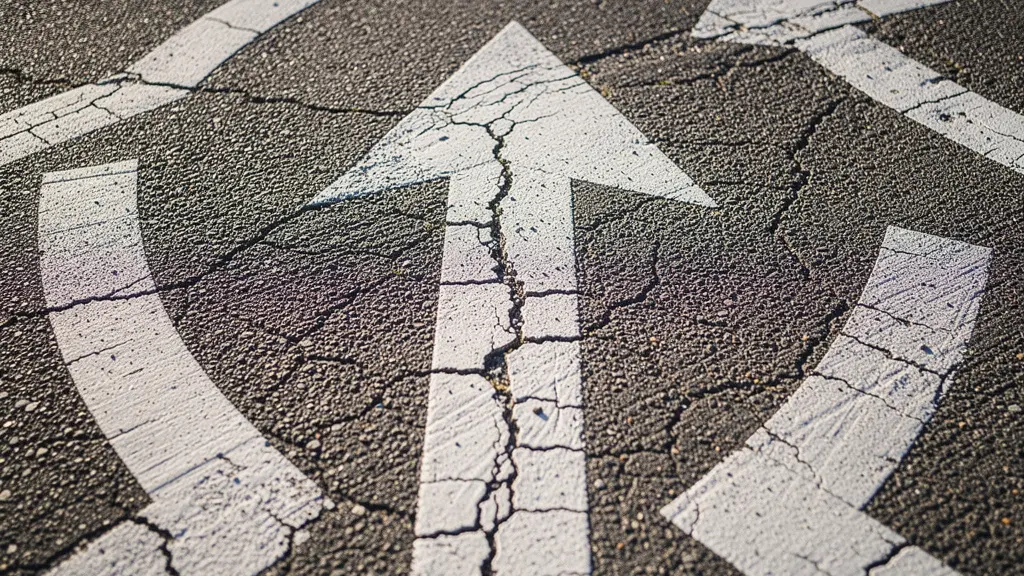
So, who is in the wrong? If a collision occurs, the driver who failed to give way to traffic from the right is legally at fault. However, the driver who failed to signal their intentions correctly shares a significant portion of the blame for creating the hazardous situation. The new mindset requires you to drive defensively. Assume nothing. Do not rely on another driver’s signal (or lack thereof). Wait until you can see their road position and speed clearly indicate their intention before you proceed. Your priority is to avoid a collision, not to insist on your right of way.
Turning left: why must you wait for the cyclist going straight ahead?
This scenario is one of the most common causes of serious collisions between cars and cyclists in urban areas. As a driver turning left, you must give way to a cyclist who is continuing straight ahead on your left-hand side. Many experienced drivers make the critical error of looking for cars, but not for cyclists, or misjudging the cyclist’s speed and turning across their path.
The ‘why’ behind this strict rule is rooted in stark statistics. Junctions are disproportionately dangerous for vulnerable road users, with Government data showing that 30% of pedestrian fatalities occur at junctions, and cyclists face similar risks. The new rules are designed to force drivers to be more vigilant in these hotspots. A cyclist proceeding straight ahead has priority over any turning traffic. Your intention to turn does not give you the right to cut across their path.
The mental recalibration needed here is to treat the cycle lane (or the space a cyclist occupies) as its own lane of traffic that you must not enter if it is occupied. This requires a systematic check of your mirrors and, crucially, your left-side blind spot immediately before you make the turn. This is not a quick glance; it’s a deliberate head-check. Signal your intention to turn left early, giving the cyclist behind you enough time to see what you are planning to do. Then, wait for them to pass before you make your turn. It might cost you a few seconds, but it could prevent a tragedy.
Touching the phone in a cradle to change a song: is it legal?
The law on mobile phone use while driving was tightened to remove any and all ambiguity. The simple answer is no, it is absolutely not legal. The 2022 update made it an offence to touch a handheld mobile phone or satellite navigation device for any reason while driving. This includes scrolling through a music playlist, changing a route, checking a notification, or even unlocking the screen.
Many experienced drivers mistakenly believe that if the phone is in a cradle, it’s okay to interact with it briefly. This is now false. The law considers « driving » to include being stopped at traffic lights or stationary in a queue of traffic. The only time you can legally use a handheld device is if your vehicle is safely parked with the engine off, or if you need to call 999 or 112 in a genuine emergency and it is unsafe or impractical to stop. The penalty for being caught is severe: a £200 fine and 6 penalty points. For a driver who passed their test within the last two years, this means an automatic revocation of their licence.
The ‘why’ for this zero-tolerance approach is cognitive distraction. Research has repeatedly shown that even a momentary interaction with a phone diverts a significant portion of your brain’s attention away from the task of driving. In that split second, a child could step into the road or the car in front could brake sharply. The law now reflects the science: there is no safe way to interact with a phone while in control of a vehicle.
Key Takeaways
- The Hierarchy of Responsibility is King: Your first thought should always be the safety of more vulnerable road users. Pedestrians at junctions, cyclists, and horse riders now have strengthened priority.
- Proactive Scanning Overrides Right of Way: The new rules demand you anticipate hazards, not just react. This means constantly scanning pavements at junctions and checking blind spots before any manoeuvre.
- Specific Distances are Non-Negotiable: Vague notions of « giving space » are gone. The 1.5-metre minimum for passing cyclists is a hard rule that you must be able to judge and adhere to, even if it means waiting.
How to anticipate road dangers before they happen?
The ultimate goal of all these rule changes is to shift every driver from a reactive to a proactive mindset. It’s not about just avoiding fines; it’s about developing the advanced skill of anticipating dangers before they materialize. This is what truly separates an experienced driver from a safe one. An experienced driver might rely on quick reflexes to handle a hazard; a safe driver sees the clues that a hazard is about to form and takes action to prevent it entirely.
This means reading the road ahead not just for other cars, but for potential scenarios. A ball rolling into the street means a child might follow. A delivery van parked on a busy road creates a blind spot where a pedestrian could emerge. A cyclist looking over their shoulder is likely about to change position. As a specialist instructor, I encourage drivers to practice ‘Commentary Driving’—verbally narrating everything they see and what potential risk it poses. This trains the brain to actively look for and process these clues, moving them from the subconscious to the conscious mind.
As motoring expert and presenter Vicki Butler-Henderson advises, this is an ongoing process of learning:
The Highway Code isn’t something you should learn once and then forget – the rules evolve, roads change, and driving habits need constant refreshing if we’re all going to stay safe and compliant.
– Vicki Butler-Henderson, Fifth Gear presenter and motoring expert
Mastering this proactive approach is the final step in your mental recalibration. It ties all the new rules together into a cohesive system of safe driving. By constantly scanning, questioning, and anticipating, you transform from someone who simply follows rules into someone who actively manages risk on the road.
Your Action Plan: Advanced Hazard Perception Techniques
- Apply the ‘Five-Second Rule’: Continuously scan the entire area you expect your vehicle to reach in the next five seconds, not just the car directly in front of you. This gives you more time to react to developing situations.
- Practice ‘Commentary Driving’: On your next drive, silently (or aloud if you’re alone) narrate potential hazards as you spot them. For example, « Parked car on the left, could be a door opening, » or « Pedestrian with a phone, might not be looking. »
- Read Body Language: Pay close attention to the body language of pedestrians and cyclists. Someone looking at their phone, appearing hesitant, or looking away from traffic signals a heightened risk.
- Watch for Environmental Clues: Look for signs that predict a hazard. A ball in the street suggests a child might follow; a bus pulling up to a stop means passengers may cross the road unexpectedly.
- Identify High-Risk Zones: Actively increase your vigilance around schools, bus stops, junctions, and parked delivery vehicles. Slow down and be prepared to stop in these areas as a default action.
The next step isn’t just to read, but to practice. On your next drive, consciously apply one of these principles. Focus on giving way at junctions or mastering the Dutch Reach. By taking these small, deliberate steps, you will retrain your driving brain and ensure your experience on the road translates into safety for everyone.
Frequently Asked Questions about New Highway Code Rules
Can I touch my phone in a cradle to change music while driving?
No. The law prohibits touching a mobile phone for any reason while driving, even if mounted. This includes changing songs, checking maps, or dismissing notifications.
What’s the penalty for touching a phone while driving?
£200 fine and 6 penalty points. For drivers within 2 years of passing their test, this means automatic licence revocation.
Does the law apply when stopped at traffic lights?
Yes. ‘Driving’ legally includes being stopped at traffic lights or in stationary traffic. The engine must be off and you must be safely parked to legally use your phone.